Introduction
Stroke is a serious neurological emergency that occurs when the blood supply to the brain is interrupted due to blockage or bleeding in the blood vessels supplying the brain.
When the brain does not receive adequate oxygen and nutrients, brain cells can begin to get damaged within minutes. Early diagnosis, immediate medical attention, and timely neurological treatment are extremely important to reduce brain damage and improve recovery outcomes.
At CANES Cardio & Neuro Clinic, Kondapur, advanced stroke evaluation and neurological care are provided under the expertise of Dr. Soumya Arapreddy, Consultant Neurologist, using modern diagnostic techniques, evidence-based stroke management, and personalized neuro care approaches.
The clinic focuses on early stroke recognition, neurological assessment, prevention of complications, rehabilitation support, and long-term brain health management.
1. Types of Stroke
Stroke can occur due to blockage of blood flow or bleeding inside the brain.
Ischemic Stroke
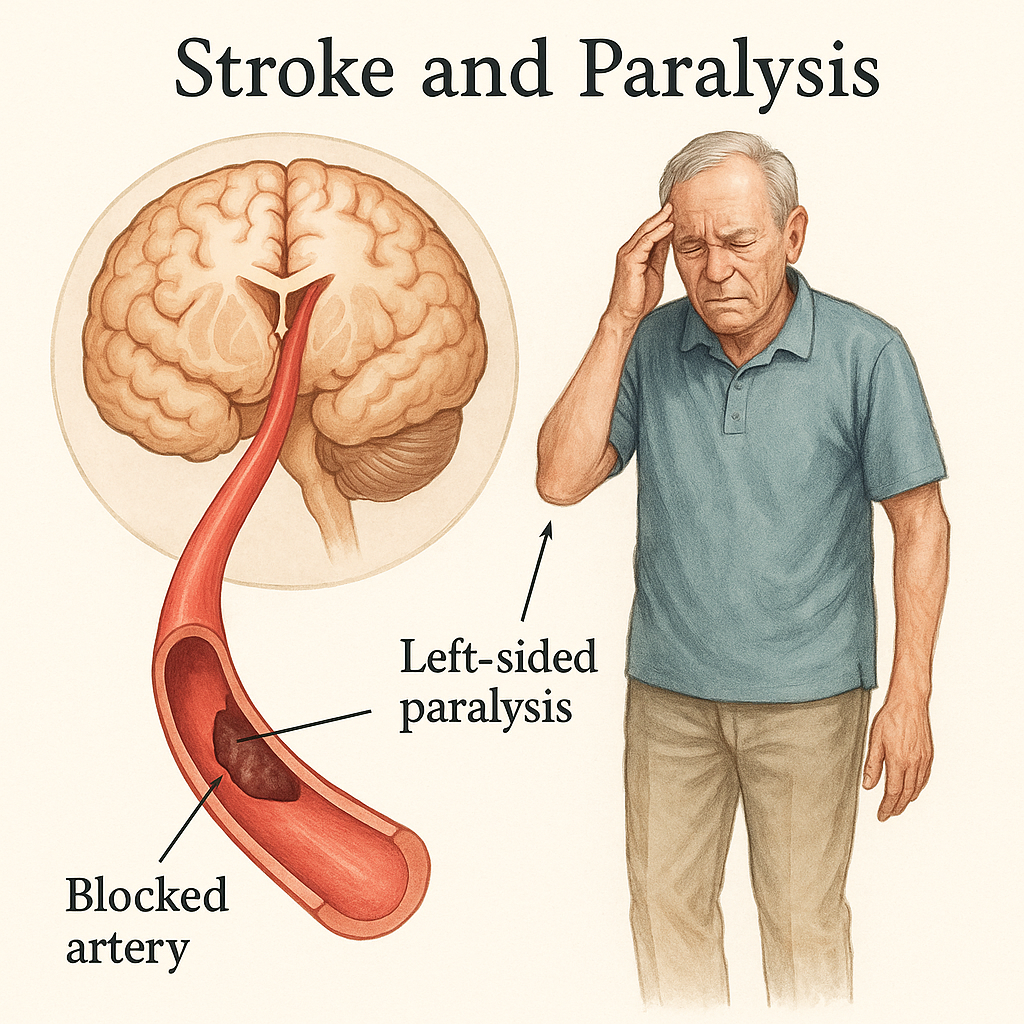
Ischemic stroke occurs when a blood vessel supplying the brain becomes blocked due to clot formation or narrowing of the arteries.
This reduces oxygen supply to brain tissue and may lead to sudden neurological symptoms if not treated immediately.
Ischemic stroke is one of the most common types of stroke.
Hemorrhagic Stroke
Hemorrhagic stroke occurs when a blood vessel inside the brain ruptures or leaks, causing bleeding within or around the brain tissue.
This type of stroke may lead to increased pressure inside the brain and requires urgent neurological evaluation and treatment.
Transient Ischemic Attack (TIA)
A Transient Ischemic Attack (TIA), often called a mini-stroke, occurs when blood flow to the brain is temporarily interrupted.
Although symptoms may improve quickly, TIA can act as an early warning sign for future stroke risk and should never be ignored.
2. Signs and Symptoms of Stroke
Early recognition of stroke symptoms can help reduce complications and improve neurological recovery.
Common signs and symptoms include:
- Sudden weakness or numbness in the face, arm, or leg
- Paralysis affecting one side of the body
- Difficulty speaking or understanding speech
- Sudden confusion
- Trouble seeing in one or both eyes
- Difficulty walking or loss of balance
- Dizziness or lack of coordination
- Severe headache with vomiting
- Sudden facial drooping
- Sudden inability to move one side of the body
Immediate medical attention is important whenever stroke symptoms appear suddenly.
Patients across Kondapur, Gachibowli, Hitech City, Madhapur, Kukatpally, Financial District, and nearby areas frequently visit CANES Clinic for advanced neurological evaluation and stroke care.
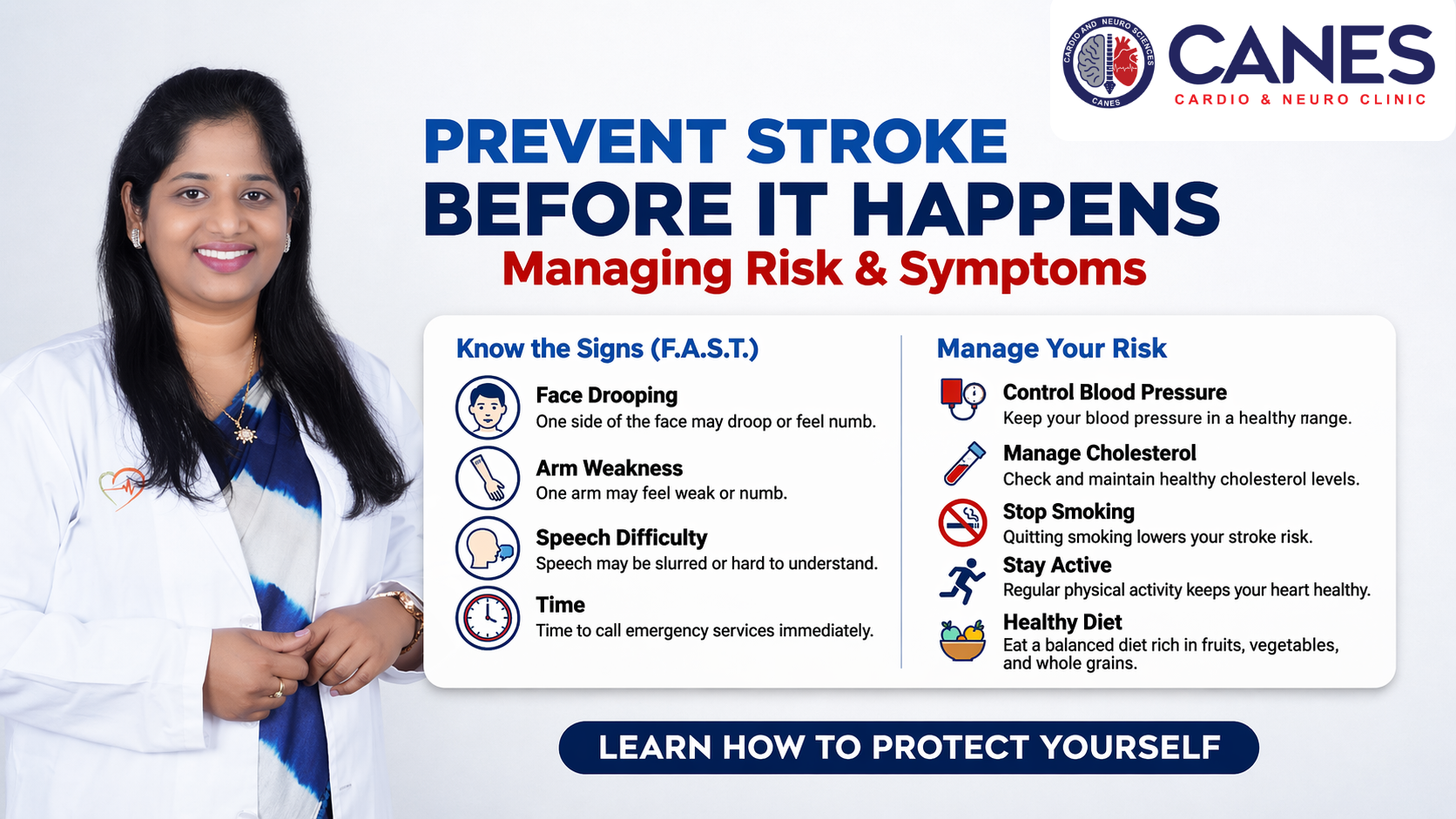
Remember FAST During Stroke
F – Face: Ask the person to smile. Check whether one side of the face droops.
A – Arms: Ask the person to raise both arms. Observe whether one arm drifts downward.
S – Speech: Ask the person to repeat a simple sentence. Notice if speech becomes slurred or unclear.
T – Time: If any of these signs are present, seek emergency medical care immediately.
Early treatment plays a major role in reducing brain damage and improving recovery outcomes.
3. Risk Factors for Stroke
Several medical conditions and lifestyle factors may increase the risk of stroke.
Common stroke risk factors include:
- High blood pressure
- Diabetes
- High cholesterol
- Heart disease
- Smoking and tobacco use
- Obesity
- Lack of physical activity
- Family history of stroke
- Increasing age
- Excessive alcohol consumption
- Previous TIA or stroke history
Managing these conditions early may help reduce long-term stroke risk.
4. Diagnosis of Stroke
Early diagnosis is essential to identify the type of stroke and begin appropriate neurological treatment without delay.
Diagnostic evaluation may include:
- Detailed neurological examination
- Blood investigations
- CT Scan Brain
- MRI Brain
- Cerebral Angiography
- Carotid Doppler
- Cardiac evaluation in selected patients
Advanced neuroimaging helps identify brain injury, blood vessel blockage, bleeding, and other neurological complications.
At CANES Cardio & Neuro Clinic, modern neurological evaluation methods are used for accurate stroke diagnosis and treatment planning.
5. Stroke Treatment
Stroke treatment depends on the type of stroke, severity of neurological damage, and timing of presentation.
Early medical care is critical to reduce permanent neurological complications and improve functional recovery.
Dr. Soumya Arapreddy provides comprehensive stroke evaluation and personalized neurological treatment plans focused on:
- Stabilizing neurological condition
- Restoring brain function
- Preventing stroke progression
- Reducing neurological complications
- Managing risk factors
- Supporting long-term rehabilitation and recovery
Neurological rehabilitation, lifestyle modification, and preventive care also play an important role in stroke recovery and recurrence prevention.
6. Stroke Prevention
Stroke prevention focuses on maintaining brain and vascular health while controlling underlying medical conditions.
Tips to reduce stroke risk include:
- Maintain healthy blood pressure
- Control diabetes and cholesterol
- Follow a balanced diet
- Exercise regularly
- Avoid smoking and tobacco use
- Limit alcohol consumption
- Maintain healthy body weight
- Attend regular medical checkups
- Take prescribed medications regularly
- Manage stress and sleep health
Early identification and treatment of stroke risk factors may significantly reduce future neurological complications.
7. Stroke Treatment in Kondapur
CANES Cardio & Neuro Clinic provides advanced stroke evaluation, neurological consultation, brain imaging assessment, and long-term neuro care for patients across Kondapur, Gachibowli, Hitech City, Madhapur, Kukatpally, Financial District, and surrounding areas.
The clinic specializes in stroke management, paralysis treatment, headache disorders, epilepsy care, neuropathy evaluation, movement disorder treatment, and comprehensive neurological care using evidence-based neurology approaches.
8. Why Choose CANES Cardio & Neuro Clinic?
Why patients choose CANES Clinic for stroke treatment:
- Advanced neurological evaluation support
- Personalized stroke management plans
- Modern brain imaging assessment
- Comprehensive neuro care approach
- Early stroke risk identification
- Long-term neurological follow-up care
- Patient-focused treatment planning
- Convenient location in Kondapur
9. About Dr. Soumya Arapreddy
9. Frequently Asked Questions