World Parkinson’s Disease Day 2026: Early Signs and Treatment Options
Table of Contents
- Introduction
- 1. Understanding Parkinson’s Disease
- 2. Recognizing the Early Signs of Parkinson’s Disease
- 3. Modern Treatment Options for Parkinson’s
- 4. Non-Motor Symptoms to Watch For
- 5. Expert Neurological Care at CANES Clinic
- FAQs
Book a Consultation
Prevention is better than cure. Talk to our specialists today.
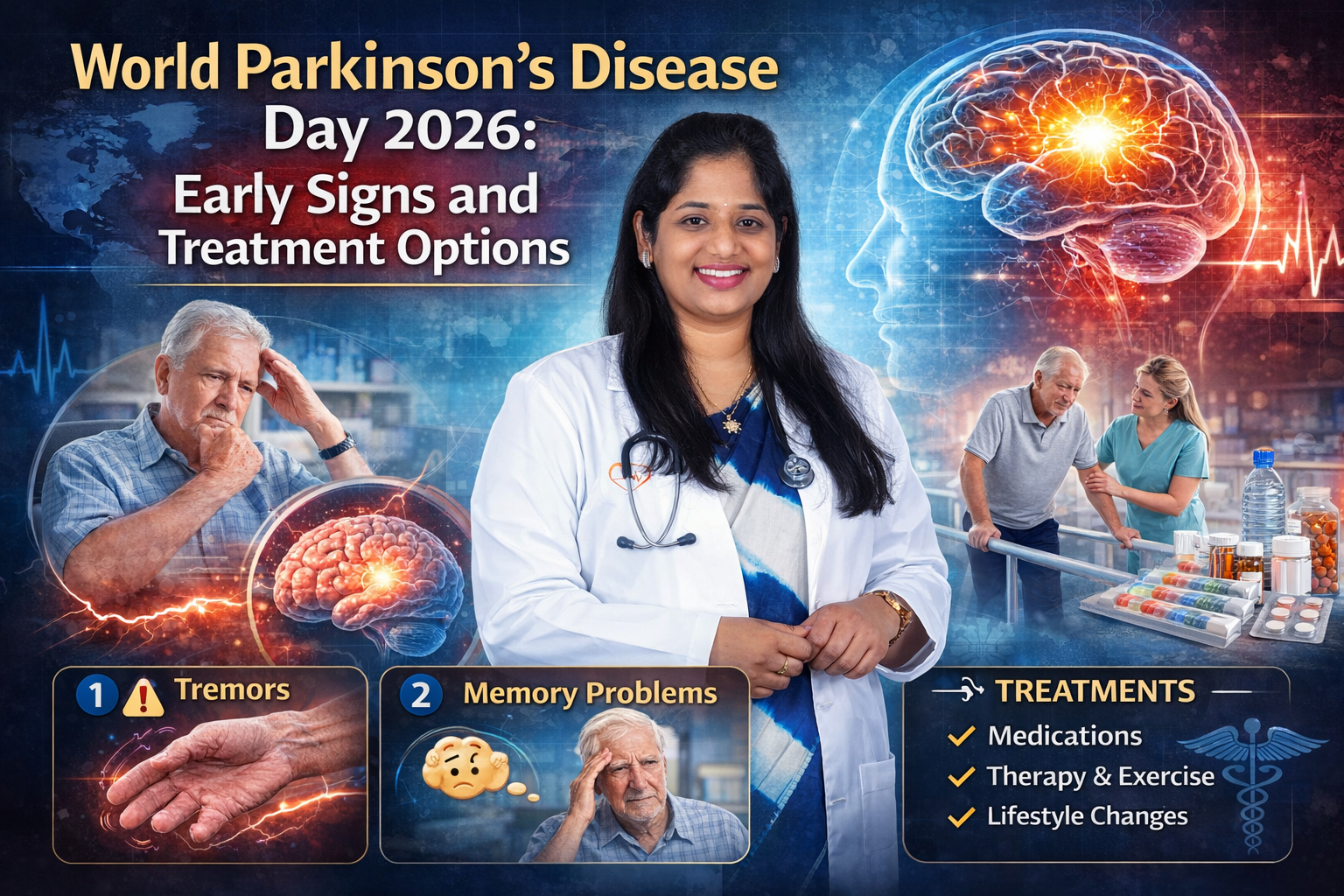
Every year on April 11th, the global healthcare community unites to raise awareness for a neurodegenerative condition that affects millions of people worldwide. As we approach World Parkinson’s Disease Day 2026, the medical community’s focus remains firmly set on patient education, the critical importance of early detection, and improving the overall quality of life for those living with the disease.
Parkinson’s disease is a progressive neurological disorder that primarily dictates how your body moves. It develops gradually, sometimes starting with a barely noticeable tremor in just one hand or a slight feeling of stiffness. Because the symptoms worsen slowly over time, early diagnosis is the most crucial step toward effective, long-term management.
At CANES Cardio & Neuro Clinic in Kondapur, Hyderabad, we believe that informed patients and proactive families make the best health decisions. In this comprehensive guide, Dr. Soumya Reddy, Consultant Neurologist, breaks down the science behind the condition, the early warning signs you should never ignore, and the modern treatment options available today.
1. Understanding Parkinson’s Disease
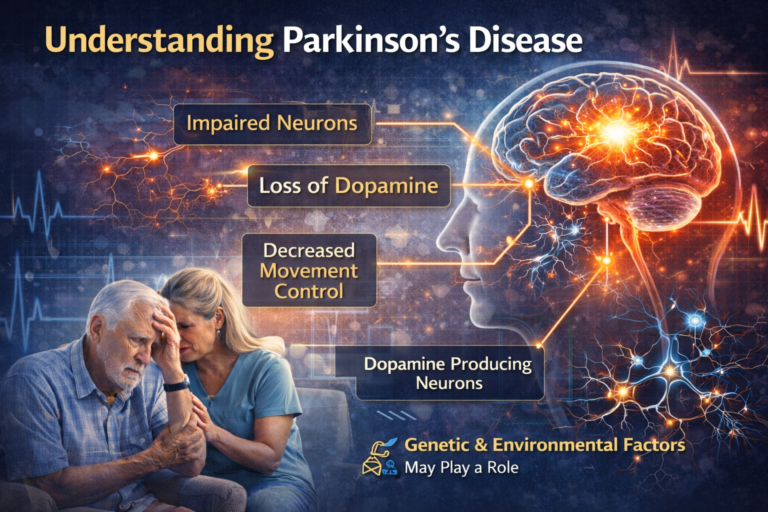
To understand the symptoms, it helps to know what is happening inside the brain. Parkinson’s disease occurs when nerve cells (neurons) in a specific area of the brain gradually break down or die.
Many of the symptoms are due to a loss of neurons that produce a chemical messenger called dopamine. When dopamine levels decrease, it causes abnormal brain activity, leading to impaired movement and other symptoms associated with the disease. While the exact cause of this neuronal breakdown remains unknown, researchers believe a combination of genetic and environmental factors plays a significant role.
2. Recognizing the Early Signs of Parkinson’s Disease
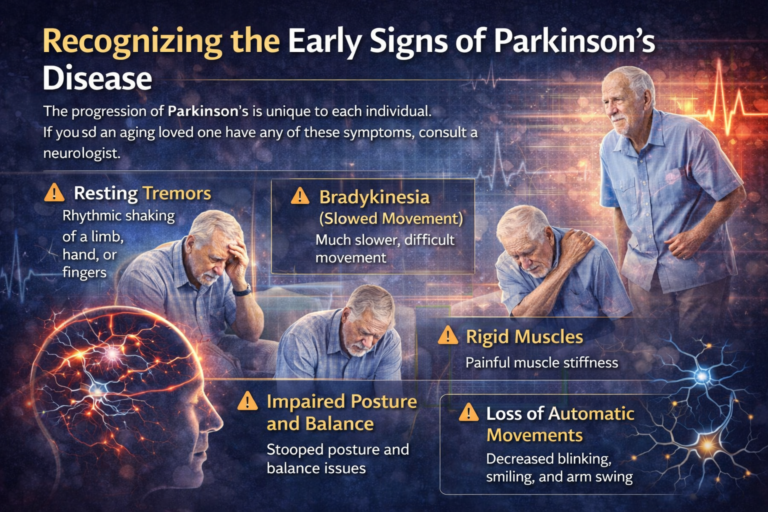
The progression of Parkinson’s is incredibly unique to each individual. Early signs can be mild and easily go unnoticed. Symptoms usually begin on one side of the body and typically remain worse on that side, even after symptoms begin to affect both limbs.
If you or an aging loved one are experiencing any of the following motor symptoms, it is highly recommended to consult a neurologist:
- Resting Tremors: This is often the most recognized sign. It involves rhythmic shaking, frequently starting in a limb, hand, or fingers, specifically when the muscle is relaxed and at rest.
- Bradykinesia (Slowed Movement): Over time, Parkinson’s may slow your movement, making simple, everyday tasks difficult and time-consuming. You might notice your steps becoming much shorter when you walk, or you may find it difficult to get out of a chair.
- Rigid Muscles: Muscle stiffness may occur in any part of your body. The stiff muscles can be quite painful and severely limit your range of motion.
- Impaired Posture and Balance: Your posture may become stooped, or you may experience unexplained balance problems and a tendency to fall backward.
- Loss of Automatic Movements: You may notice a decreased ability to perform unconscious physical movements, such as blinking normally, smiling, or swinging your arms naturally when you walk.
3. Non-Motor Symptoms to Watch For
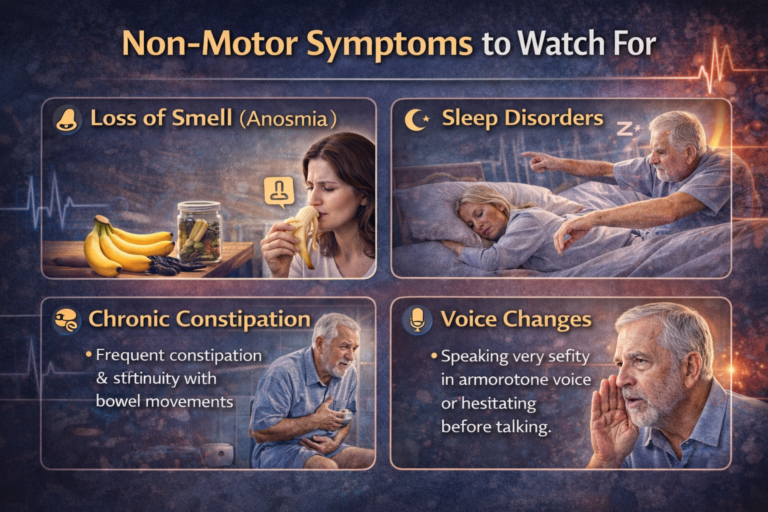
While movement issues are the primary indicators, Parkinson’s also presents several “non-motor” symptoms that often appear years before the physical tremors begin. These include:
- Loss of Smell (Anosmia): Trouble smelling certain foods like bananas, dill pickles, or licorice.
- Sleep Disorders: Thrashing around in bed or acting out vivid dreams.
- Chronic Constipation: A common early warning sign due to the slowing down of the digestive tract.
- Voice Changes: Speaking very softly, in a monotone voice, or hesitating before talking.
4. Modern Treatment Options for Parkinson’s
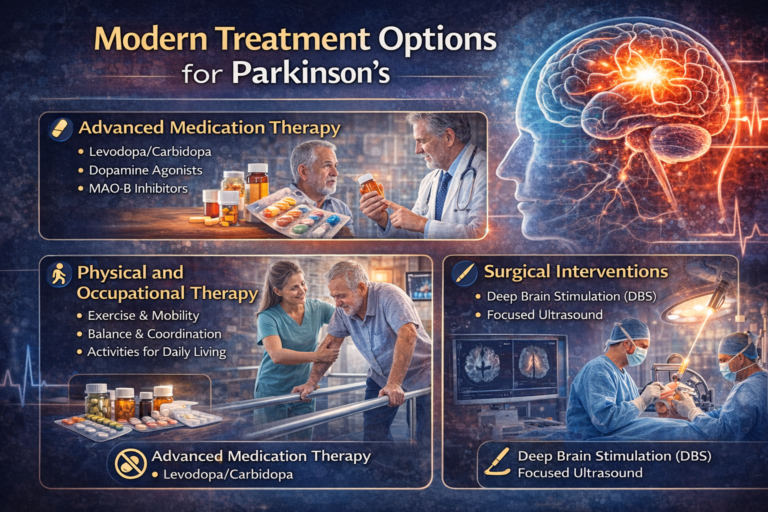
While there is currently no absolute cure for Parkinson’s disease, significant medical advancements mean that symptoms can be highly effectively managed. The primary goal of treatment is to relieve symptoms, improve mobility, and maintain a high quality of life.
1. Advanced Medication Therapy
Medications are the cornerstone of Parkinson’s treatment. They work dramatically to manage problems with walking, movement, and tremors. These drugs function by substituting or increasing dopamine in the brain. Levodopa, almost always combined with carbidopa to prevent premature breakdown, remains the gold standard and most effective Parkinson’s disease medication available today. Other medications include dopamine agonists and MAO B inhibitors.
2. Physical and Occupational Therapy
Managing Parkinson’s requires more than just pills. A dedicated physical therapist can help you design an exercise program to improve mobility, balance, and flexibility. Occupational therapy assists patients in modifying their daily activities and home environments, ensuring they retain their independence safely for as long as possible.
3. Surgical Interventions
For patients who have had Parkinson’s for several years and no longer respond adequately to standard medications, advanced surgical procedures like Deep Brain Stimulation (DBS) may be recommended. This involves a surgeon implanting electrodes into a specific part of your brain to help regulate abnormal electrical signaling, which can drastically reduce motor symptoms.
Expert Neurological Care at CANES Clinic
Navigating a Parkinson’s diagnosis requires a highly compassionate, multidisciplinary approach. Early intervention and a tailored treatment plan can drastically alter the trajectory of the disease, allowing patients to live active, fulfilling lives for many years.
Dr. Soumya Reddy and the dedicated neurology team at CANES Cardio & Neuro Clinic offer comprehensive diagnostic evaluations, advanced neuro-diagnostics, and personalized, ongoing management plans for all movement disorders.
Take charge of your neurological health this World Parkinson’s Disease Day 2026.
📍 Location: 3rd Floor, Tapasavi Commercial Complex, Hi-Tension Rd, Kondapur, Hyderabad.
📞 Call Us: +91 9014944654
🌐 Book an Appointment: Visit our website to schedule a consultation with Dr. Soumya Reddy today.
Frequently Asked Questions (FAQs)
Expert Care
Hyderabad's leading Cardio & Neuro specialists.