Introduction
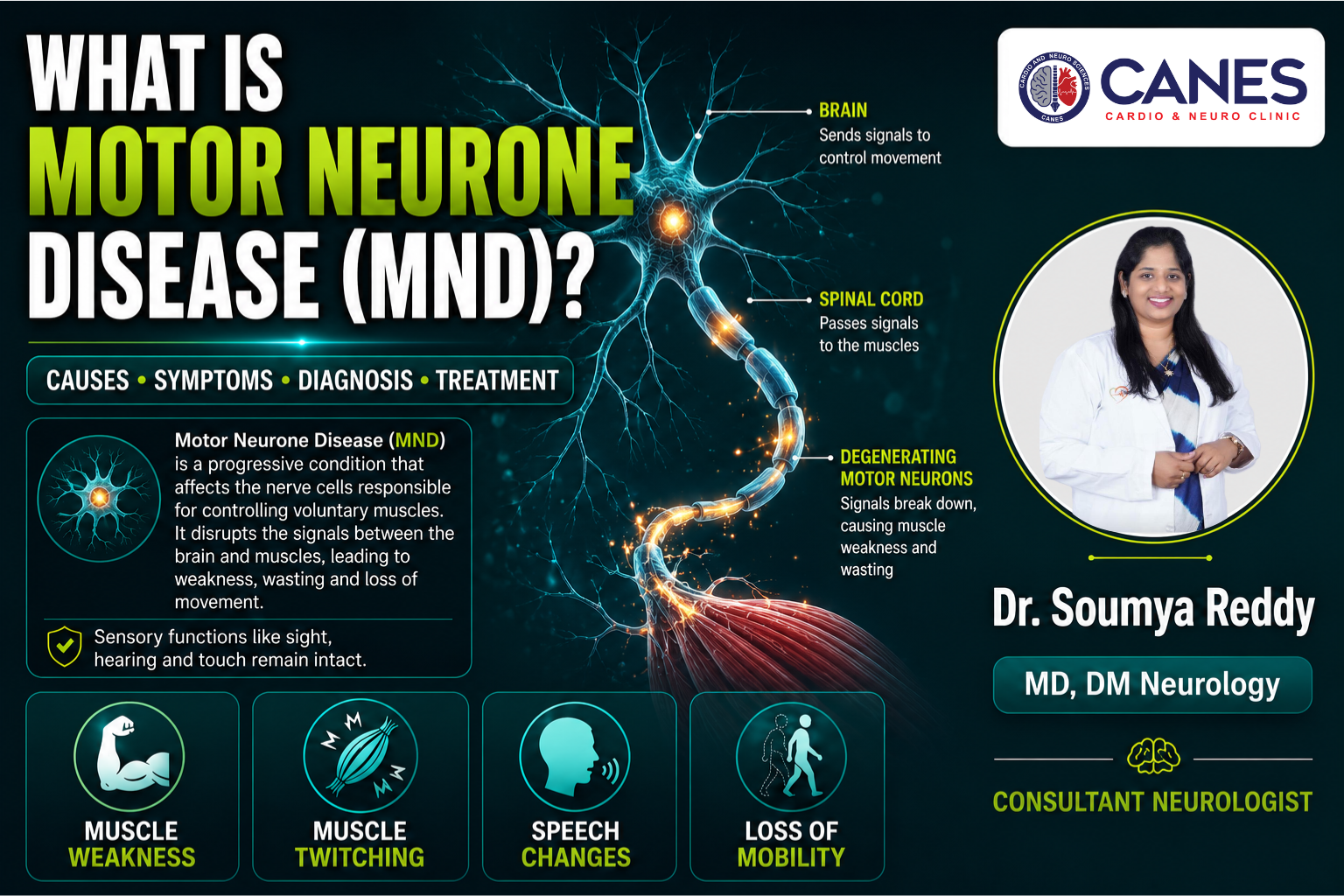
Motor Neuron Disease (MND) is a rare and progressive neurological disorder that affects the motor neurons the specialized nerve cells in the brain and spinal cord responsible for controlling voluntary muscle movements.
As these nerve cells gradually deteriorate, muscles become weaker and lose their ability to function properly, leading to difficulties with walking, speaking, swallowing, breathing, and performing daily activities.
At CANES Cardio & Neuro Clinic, Kondapur, advanced Motor Neuron Disease evaluation and neuromuscular disorder care are provided under the expertise of Dr. Soumya Arapreddy, Consultant Neurologist, using modern neurological assessment methods and personalized treatment approaches.
The clinic focuses on early diagnosis, symptom management, rehabilitation support, functional independence, and improving overall quality of life for patients with progressive neurological disorders.
1. What is Motor Neuron Disease?
Motor Neuron Disease affects the nerves that control voluntary muscle activity throughout the body.
These muscles are responsible for essential functions such as:
- Walking
- Speaking
- Swallowing
- Breathing
- Hand and arm movements
- Daily physical activities
As the disease progresses, the damaged motor neurons are unable to send proper signals to muscles, causing gradual muscle weakness and wasting.
Although there is currently no complete cure for MND, early diagnosis and multidisciplinary neurological care can help improve symptom control and quality of life.
Patients from Kondapur, Gachibowli, Hitech City, Madhapur, Kukatpally, Financial District, and nearby areas frequently seek neurological consultation at CANES Clinic for Motor Neuron Disease evaluation and neuromuscular disorder management.
2. Symptoms of Motor Neuron Disease
Symptoms usually develop gradually and may vary depending on the areas of the nervous system affected.
Early symptoms may include:
- Weakness in legs or ankles
- Difficulty climbing stairs
- Frequent tripping or falls
- Weak hand grip
- Difficulty opening containers
- Difficulty buttoning clothes
- Muscle cramps
- Muscle twitching (Fasciculations)
- Slurred speech
- Difficulty swallowing
- Fatigue
- Unexplained weight loss
As the disease progresses:
- Walking may become more difficult
- Arm and hand weakness may worsen
- Speech may become unclear
- Swallowing difficulties may increase
- Breathing muscles may become affected
- Daily activities may become challenging
Early neurological evaluation is important for accurate diagnosis and treatment planning.
3. What Causes Motor Neuron Disease?
The exact cause of Motor Neuron Disease remains unclear in many patients.
Some cases are linked to genetic factors, while others occur without a known family history.
Possible risk factors include:
- Genetic mutations
- Family history of neurological disease
- Increasing age
- Environmental factors
- Neurological degeneration
Ongoing neurological research continues to improve understanding of the causes and progression of Motor Neuron Disease.
4. Diagnosis of Motor Neuron Disease
Diagnosis involves detailed neurological assessment and specialized investigations to evaluate nerve and muscle function.
Diagnostic evaluation may include:
- Neurological examination
- Electromyography (EMG)
- Nerve Conduction Studies (NCS)
- MRI Brain Scan
- MRI Spine Scan
- Blood investigations
- Neuromuscular evaluation
- Assessment to exclude other neurological disorders
Electromyography (EMG)
EMG helps evaluate electrical activity within muscles and assists in identifying motor neuron dysfunction.
Nerve Conduction Studies
These tests help assess nerve function and assist in differentiating MND from other neuromuscular conditions.
At CANES Cardio & Neuro Clinic, advanced neurological assessment methods are used for accurate diagnosis and long-term management planning.
5. Treatment for Motor Neuron Disease
Although there is currently no complete cure for Motor Neuron Disease, treatment focuses on slowing disease progression, relieving symptoms, preserving function, and improving quality of life.
Treatment goals include:
- Improving comfort and mobility
- Supporting communication and swallowing
- Managing muscle weakness and stiffness
- Preserving breathing function
- Maintaining independence
- Enhancing quality of life
Treatment options may include:
- Medications such as Riluzole
- Physical therapy and rehabilitation
- Speech and swallowing therapy
- Nutritional support
- Respiratory support when required
- Mobility assistance devices
- Long-term neurological monitoring
- Multidisciplinary neurological care
Comprehensive care can help patients maintain functional independence and daily activities for as long as possible.
Dr. Soumya Arapreddy provides individualized treatment plans focused on symptom management, rehabilitation support, and long-term neurological wellness.
6. Motor Neuron Disease Care & Management
While Motor Neuron Disease may not always be preventable, supportive care can significantly improve quality of life.
Helpful lifestyle and care measures include:
- Attend regular neurological consultations
- Stay physically active within comfort limits
- Maintain balanced nutrition
- Seek support for speech difficulties
- Manage swallowing problems early
- Avoid smoking and excessive alcohol
- Manage emotional well-being
- Follow rehabilitation programs consistently
- Use supportive devices when needed
Early supportive care often improves comfort, mobility, and symptom control.
7. When Should You Consult a Neurologist?
Neurological consultation is recommended if you experience:
- Persistent muscle weakness
- Muscle twitching or cramps
- Difficulty speaking
- Difficulty swallowing
- Frequent falls
- Balance problems
- Weak hand grip
- Unexplained muscle wasting
- Progressive weakness affecting daily activities
Early neurological assessment is essential for accurate diagnosis and timely management.
8. Motor Neuron Disease Treatment in Kondapur
CANES Cardio & Neuro Clinic provides advanced Motor Neuron Disease evaluation and comprehensive neurological care for patients across Kondapur, Gachibowli, Hitech City, Madhapur, Kukatpally, Financial District, and surrounding areas.
The clinic specializes in neuromuscular disorder evaluation, motor neuron disease management, neuropathy treatment, epilepsy care, movement disorder management, autoimmune neurological disorders, and comprehensive neurological consultation using evidence-based neurology approaches.
9. Why Choose CANES Cardio & Neuro Clinic?
Why patients choose CANES Clinic for Motor Neuron Disease care:
- Advanced neuromuscular evaluation
- EMG and nerve conduction study assessment
- Personalized treatment planning
- Comprehensive rehabilitation support
- Long-term neurological monitoring
- Evidence-based neurological care
- Patient-focused management approach
- Convenient location in Kondapur
10. About Dr. Soumya Arapreddy
Dr. Soumya Arapreddy
MD, DM Neurology
Consultant Neurologist
Dr. Soumya Arapreddy is a Consultant Neurologist with expertise in Motor Neuron Disease, neuromuscular disorders, epilepsy management, migraine treatment, neuropathy care, movement disorders, autoimmune neurological diseases, and various neurological conditions affecting the brain, spine, nerves, and muscles.
She focuses on evidence-based neurological care, accurate diagnosis, and personalized treatment planning using modern neurology approaches and compassionate patient care.
At CANES Cardio & Neuro Clinic, Kondapur, she provides comprehensive neurological care for patients with Motor Neuron Disease, neuropathy, Multiple Sclerosis, Parkinson’s disease, epilepsy, migraine, spine disorders, and other neurological conditions.
Expertise Areas
- Stroke (Paralysis)
- Migraine
- Headache
- Epilepsy
- Neck / Back Pain
- Neuropathy
- Dementia & Alzheimer’s Disorders
- Parkinson’s Disorders
- Multiple Sclerosis Disorder
- Pediatric Neurology
- CNS Infections
- Motor Neuron Disease
- Neuromuscular Disorders
- Spinal Cord Disorders
- Trigeminal Neuralgia
- Vertigo
9. Frequently Asked Questions