How Sleep Disorders Affect Brain Health: Causes, Symptoms & Prevention Tips
Table of Contents
- Introduction
- 1. The Science: How Sleep Disorders Affect Brain Health
- 2. Key Symptoms of Sleep-Related Brain Strain
- 3. Common Causes of Sleep Disorders
- 4. 7 Prevention Tips for Better Sleep
- 4. World-Class Neurological Care at CANES Clinic
- FAQs
Book a Consultation
Prevention is better than cure. Talk to our specialists today.
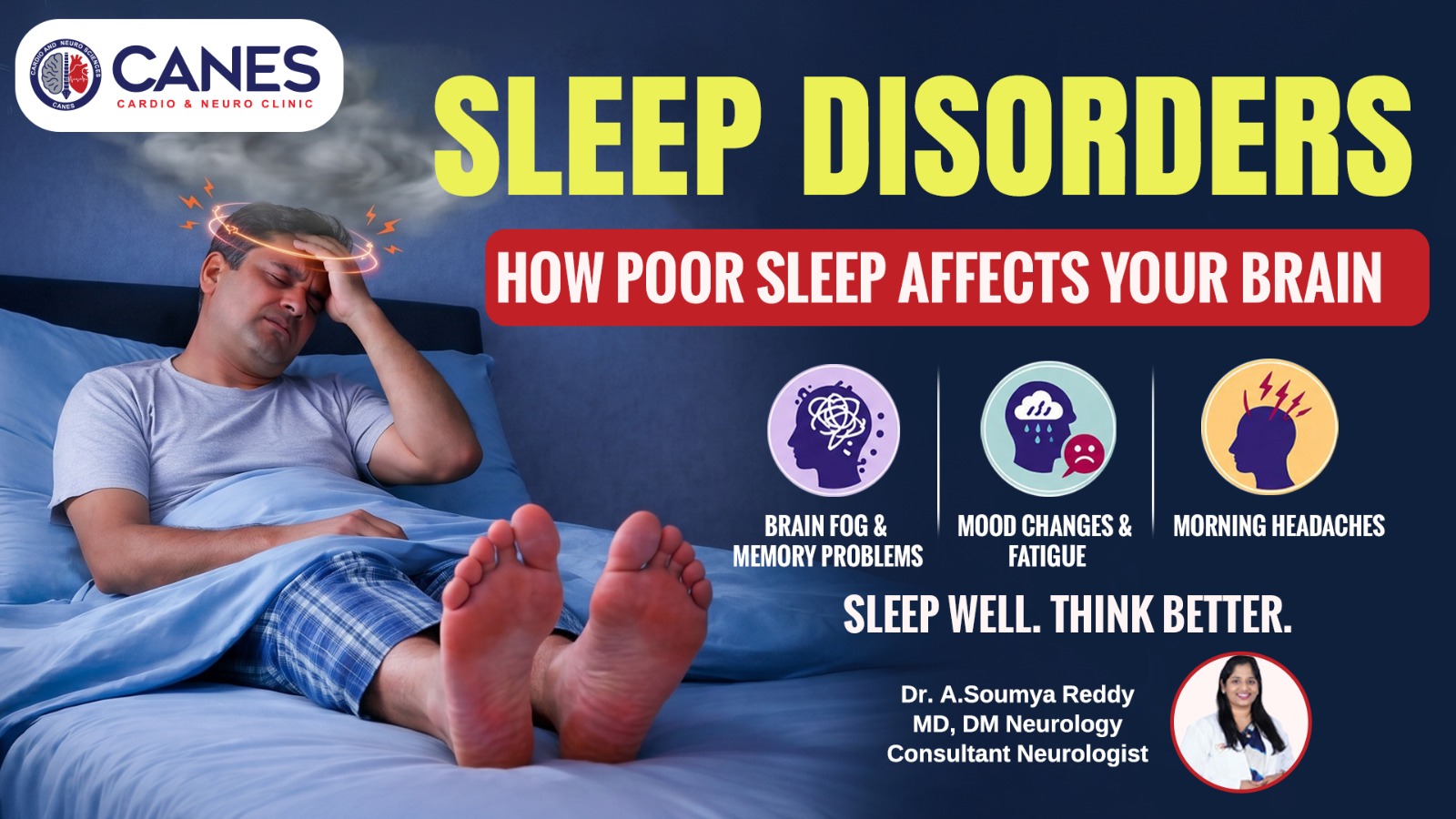
We all know the groggy, irritable feeling that follows a bad night of sleep. However, chronic sleep deprivation is far more dangerous than just feeling tired the next day. If you are consistently struggling to fall asleep, stay asleep, or wake up feeling rested, you might be asking: exactly how sleep disorders affect brain health over the long term?
The truth is, sleep is not a passive state where your brain just “shuts off.” It is an incredibly active period of neurological maintenance, cellular repair, and memory consolidation. When this cycle is disrupted, the cognitive consequences can be severe.
At CANES Cardio & Neuro Clinic, recognized as a top-tier heart and brain clinic in Hyderabad, we treat sleep not as a luxury, but as a critical medical necessity. Guided by Dr. Soumya Reddy, a leading neurologist in Hyderabad, our team specializes in identifying how poor sleep damages the nervous system and how to reverse it. In this complete guide, we will explore how sleep disorders affect brain health, the major symptoms to watch for, and the best prevention tips.
1. The Science: How Sleep Disorders Affect Brain Health
To understand the damage, we must look at what happens in a healthy brain during deep sleep. During the night, your brain activates the glymphatic system a microscopic waste-clearance network. This system flushes out toxic byproducts that accumulate during waking hours, including a protein called amyloid-beta, which is heavily linked to Alzheimer’s disease.
When you suffer from insomnia, sleep apnea, or frequent wakefulness, this biological “cleaning cycle” is interrupted. Toxins build up, brain cells become inflamed, and the communication pathways between neurons begin to break down. This is the primary mechanism of how sleep disorders affect brain health, leading to accelerated cognitive decline and an increased risk of neurodegenerative diseases.
2. Key Symptoms of Sleep-Related Brain Strain
How do you know if your brain is suffering from a lack of quality rest? The neurological symptoms of a sleep disorder often manifest during your waking hours:
1. Severe Brain Fog: A persistent inability to focus, concentrate, or process complex information at work or school.
2. Memory Impairment: Difficulty forming new memories or recalling short-term information, as sleep is when the brain permanently files away your daily experiences.
3. Emotional Instability: Heightened anxiety, sudden mood swings, or symptoms of depression, as the brain’s emotional regulation centers become hyperactive.
4. Slower Reaction Times: A dangerous delay in physical and mental reflexes, which can make driving or operating machinery hazardous.
5. Chronic Morning Headaches: Waking up with a dull, throbbing headache is a classic neurological sign of poor sleep quality or sleep apnea.
3. Common Causes of Sleep Disorders
Understanding the root cause is essential for effective treatment. The most frequent culprits include:
1. Obstructive Sleep Apnea (OSA): A dangerous condition where the airway repeatedly collapses during sleep, cutting off oxygen to the brain and causing micro-awakenings hundreds of times a night.
2. Chronic Insomnia: Often driven by generalized anxiety, chronic stress, or an overactive nervous system that refuses to transition into a resting state.
3. Circadian Rhythm Disruptions: Shift work, frequent jet lag, or extreme late-night screen time can completely derail the brain’s natural internal clock.
4. Restless Legs Syndrome (RLS): A neurological condition that causes an irresistible, uncomfortable urge to move the legs, preventing the onset of deep sleep.
4. 7 Prevention Tips for Better Sleep
Fortunately, you can actively protect your neurological health by practicing strict “sleep hygiene.” A leading neurologist in Hyderabad will typically recommend these 7 prevention strategies:
1. Enforce a Strict Sleep Schedule: Go to bed and wake up at the exact same time every day, even on weekends, to stabilize your circadian rhythm.
2. Implement a Digital Curfew: Turn off all blue-light-emitting screens (phones, TVs, tablets) at least one hour before bed, as blue light suppresses melatonin production.
3. Optimize Your Environment: Keep your bedroom pitch black, perfectly quiet, and cool (around 65°F or 18°C) to signal to your brain that it is time to hibernate.
4. Limit Late-Day Stimulants: Cut off all caffeine consumption by 2:00 PM and avoid heavy alcohol use before bed, as alcohol completely destroys deep REM sleep.
5. Exercise Consistently: Engaging in 30 minutes of cardiovascular exercise during the day dramatically improves your ability to fall asleep at night.
6. Practice Decompression: Spend the last 30 minutes of your day doing a calming activity, such as reading a physical book, gentle stretching, or deep breathing exercises.
7. Do Not Ignore Snoring: If you snore loudly or wake up gasping for air, seek a medical sleep study immediately to rule out sleep apnea.
World-Class Neurological Care at CANES Clinic
Do not wait until your memory begins to slip to take your sleep seriously. At CANES Cardio & Neuro Clinic, a top-tier heart and brain clinic in Hyderabad, we use advanced diagnostics like EEG (Electroencephalogram) and overnight sleep studies to monitor your brainwaves and identify exactly what is disrupting your rest.
Protect your brain today for a healthier tomorrow.
📍 Location: 3rd Floor, Tapasavi Commercial Complex, Hi-Tension Rd, Kondapur, Hyderabad
📞 Call Us: +91 9014944654
🌐 Book an Appointment: https://canesclinic.com/
Frequently Asked Questions (FAQs)
Expert Care
Hyderabad's leading Cardio & Neuro specialists.