Heart Palpitations: 7 Signs When It’s Normal and When You Should Worry
Table of Contents
- Introduction
- 1. What Are Heart Palpitations?
- 2. Physiological (Normal) Palpitations: The Harmless Flutters
- 3. Pathological (Abnormal) Palpitations: Hidden Health Issues
- 4. 7 Warning Signs: When You Should Worry
- 5. Diagnosis: When to Consult a Top Heart Specialist in Hyderabad
- 6. Simple Measures to Reduce Benign Palpitations
- 6. Reclaim Your Peace of Mind at CANES Clinic
- FAQs
Book a Consultation
Prevention is better than cure. Talk to our specialists today.
Heart palpitations are one of the most common reasons people seek a cardiac consultation. Patients often sit in our office and describe terrifying sensations a “racing heart,” “skipped beats,” a sudden “fluttering,” or a feeling that their heart is “pounding” right out of their chest. While these physical sensations can trigger intense anxiety, it is important to know that not all of them indicate underlying heart disease.
Understanding the critical difference between physiological (normal) and pathological (abnormal) heart rhythms is the key to knowing when simple reassurance is enough and when immediate medical evaluation is necessary.
At CANES Cardio & Neuro Clinic, recognized as a leading cardiac clinic in Hyderabad, we believe in empowering our patients with knowledge. Guided by Dr. Kiran Lakkireddy, a top heart specialist in Hyderabad, we help patients decode their cardiac symptoms. In this master guide, we will explore exactly what heart palpitations are, why they happen, and the critical warning signs that mean you should seek immediate care.
1. What Are Heart Palpitations?
In the simplest terms, heart palpitations are an acute awareness of your own heartbeat. Under normal circumstances, your heart beats steadily in the background without you ever noticing it. However, when the rhythm becomes irregular, significantly faster, or much more forceful, your nervous system alerts you, and you begin to actually feel the mechanical pumping of your heart
2. Physiological (Normal) Palpitations: The Harmless Flutters
Physiological palpitations are completely benign and temporary. They are usually triggered by external or reversible lifestyle factors and do not indicate underlying heart disease in the vast majority of cases.
Physiologically, these palpitations are caused by an adrenaline surge (increased sympathetic nervous system activity), which temporarily increases your heart rate and the force of contraction. The heart itself remains structurally normal.
Common Harmless Triggers Include:
1. Heavy physical exertion or intense exercise.
2. Emotional stress, sudden anxiety, or panic attacks.
3. High caffeine intake (coffee, strong tea, energy drinks).
5. Nicotine consumption from smoking or vaping.
6. Excessive alcohol intake.
7. Temporary bodily stress like fever, severe dehydration, or lack of sleep.
Typical Features of Normal Palpitations:
1. They are short-lasting episodes, resolving in seconds to minutes.
2. They occur during or immediately after a specific trigger.
3. They settle quickly with physical rest or mental relaxation.
4. They occur without any associated pain or dizziness.
3. Pathological (Abnormal) Palpitations: Hidden Health Issues
On the other hand, pathological heart palpitations may indicate an underlying heart rhythm disorder (an arrhythmia) or a systemic disease. These should never be ignored.
Cardiac Causes:
1. Premature beats (PACs or PVCs), where the heart fires an electrical signal too early.
2. Supraventricular Tachycardia (SVT), a rapid heartbeat originating above the ventricles.
3. Atrial Fibrillation or Atrial Flutter, where the upper chambers beat out of coordination.
4. Ventricular Tachycardia, a rare but highly dangerous rapid rhythm in the lower chambers.
Non-Cardiac Systemic Causes:
1. Severe anemia (low red blood cell count).
2. Thyroid disorders, particularly an overactive thyroid (hyperthyroidism).
3. Critical electrolyte imbalances involving potassium or magnesium.
4. Hormonal shifts during menopause or pregnancy.
4. 7 Warning Signs: When You Should Worry
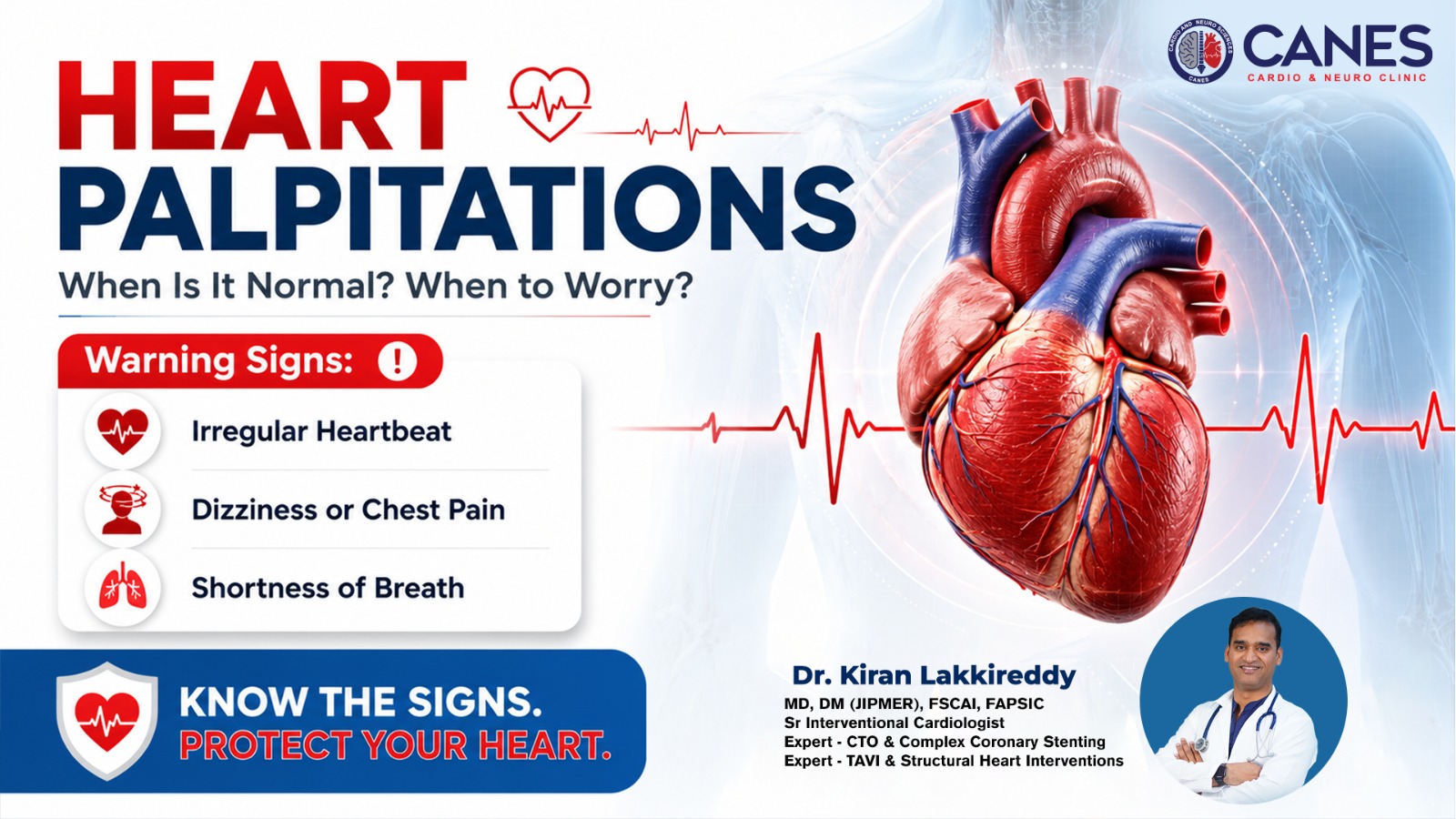
You must not ignore heart palpitations if they are accompanied by “red flag” symptoms. If you experience any of the following, your heart may be struggling to pump blood effectively:
1. Dizziness or Lightheadedness: Feeling like the room is spinning.
2. Syncope (Fainting): Passing out or experiencing “near-fainting” spells.
3. Chest Discomfort: A heavy, aching, or tight pain in the center of the chest.
4. Shortness of Breath: Gasping for air even while resting.
5. Sudden Rapid Onset: A resting heart rate that suddenly spikes above 150 beats per minute.
6. Persistent Irregularity: A heartbeat that feels chaotic and does not settle down after a few minutes.
7. Unprovoked Episodes: Palpitations that happen while you are completely at rest with no obvious trigger.
Note: A family history of sudden cardiac death drastically increases the urgency of these symptoms.
5. Diagnosis: When to Consult a Top Heart Specialist in Hyderabad
If you experience palpitations with fainting, chest pain, or a sustained rapid heart rate, seek emergency immediate consultation.
For recurrent, unexplained flutters that reduce your exercise tolerance or cause chronic fatigue, schedule a routine consultation at the leading cardiac clinic in Hyderabad. Dr. Kiran Lakkireddy will likely recommend specific diagnostic testing:
1. Electrocardiogram (ECG): To capture your baseline electrical rhythm.
2. Holter Monitoring: A wearable device used for 24–48 hours to capture intermittent, random events.
3. Echocardiography (2D Echo): An ultrasound to visually assess the structural integrity of your heart muscles and valves.
6. Simple Measures to Reduce Benign Palpitations
If your doctor has ruled out serious disease, you can manage benign palpitations by modifying your daily habits. Reduce your intake of caffeine and alcohol, ensure you are drinking plenty of water, and establish a strict, healthy sleep schedule. Practicing stress reduction techniques like yoga or mindful meditation can also drastically calm an overactive nervous system.
Reclaim Your Peace of Mind at CANES Clinic
Most heart palpitations are entirely harmless, especially in young, healthy individuals. However, the presence of warning signs should never be dismissed. Early evaluation can detect potentially serious conditions and provide massive reassurance when the cause is benign.
📍 Location: 3rd Floor, Tapasavi Commercial Complex, Hi-Tension Rd, Kondapur, Hyderabad
📞 Call Us: +91 9014944654
🌐 Book an Appointment: https://canesclinic.com/
Frequently Asked Questions (FAQs)
Expert Care
Hyderabad's leading Cardio & Neuro specialists.