7 Warning Signs of Peripheral Neuropathy: Symptoms and Treatment Explained
Table of Contents
- Introduction
- 1. What is Peripheral Neuropathy?
- 2. Modern Treatment Options at CANES Clinic
- 3. Why Choose CANES Cardio & Neuro Clinic?
- FAQs
Book a Consultation
Prevention is better than cure. Talk to our specialists today.
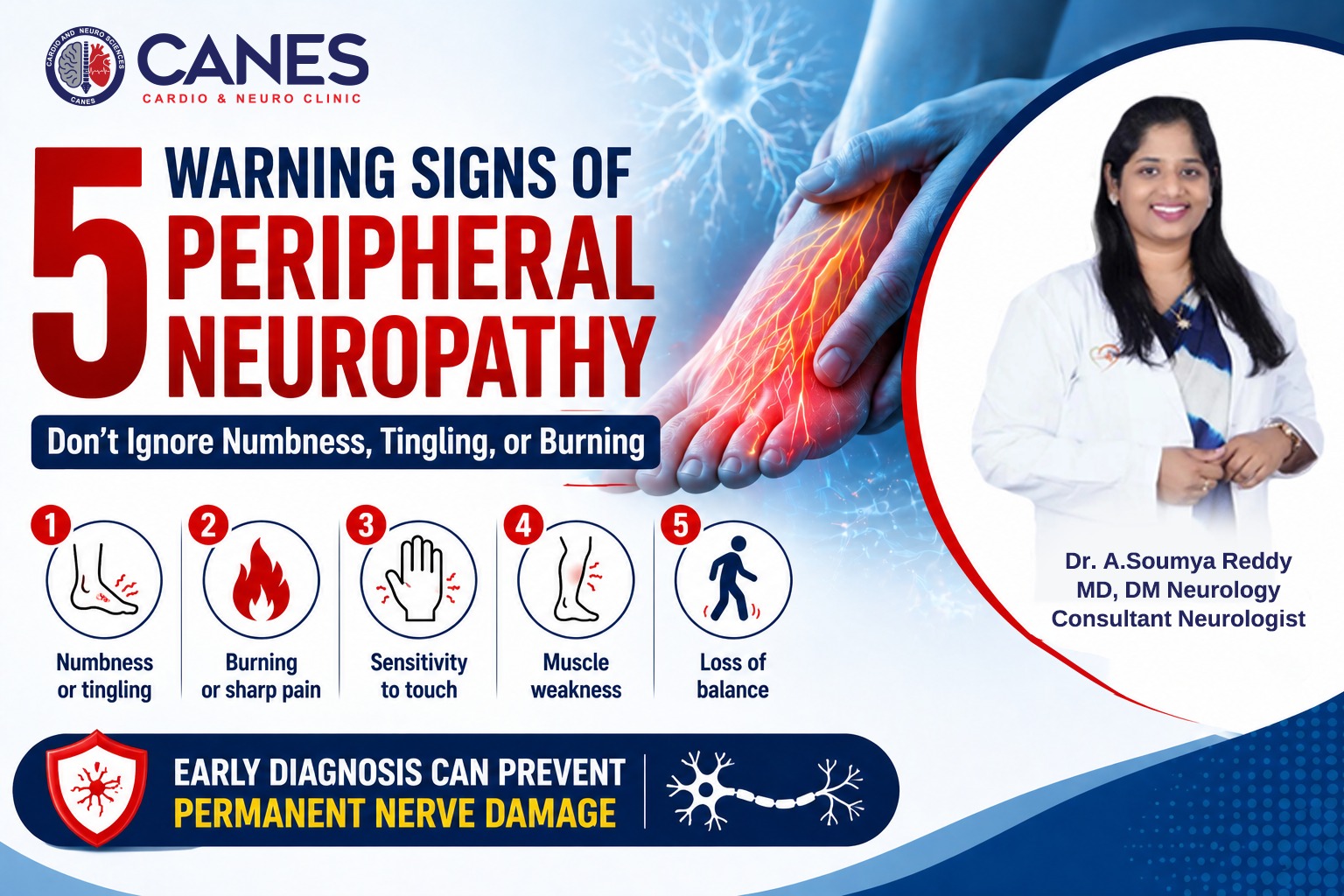
Dealing with unexplained tingling, numbness, or a burning sensation in your hands and feet can be deeply distressing. These are not just signs of “getting older” or “poor circulation” they are often the primary indicators of nerve damage. Understanding Peripheral Neuropathy: Symptoms and Treatment is the first step toward preventing permanent disability and reclaiming your quality of life.
At CANES Cardio & Neuro Clinic in Kondapur, Hyderabad, our neurology department led by Dr. Soumya Reddy specializes in diagnosing and managing complex nerve disorders. Because peripheral nerves connect your central nervous system to the rest of your body, any damage can disrupt your ability to move, feel, and function normally.
What is Peripheral Neuropathy?
Peripheral neuropathy occurs when the nerves located outside of the brain and spinal cord (peripheral nerves) become damaged. These nerves are responsible for sending sensory information to the brain and carrying signals from the brain to the muscles.
While diabetes is the most common cause, other factors like vitamin deficiencies, autoimmune diseases, and infections can also trigger the condition. Regardless of the cause, the path to recovery starts with recognizing the “5 Warning Signs.”
1. Gradual Onset of Numbness or Tingling
The most frequent early sign of Peripheral Neuropathy: Symptoms and Treatment needs is a “pins and needles” sensation. This usually begins in the toes or the balls of the feet and can slowly spread upward into the legs. Some patients describe it as feeling like they are “wearing an invisible sock” that won’t come off.
2. Sharp, Jabbing, or Burning Pain
Unlike a typical muscle ache, neuropathic pain is often described as electric or searing. This pain can be intermittent or constant and is frequently worse at night, often disrupting sleep patterns. If you feel a “burning” sensation in your extremities, it is a clear sign that the nerve fibers are misfiring.
3. Extreme Sensitivity to Touch
For individuals with advanced neuropathy, even the lightest touch can become agonizing. This condition, known as allodynia, means that the weight of a bedsheet or the touch of clothing against the skin can cause intense pain.
4. Muscle Weakness and Lack of Coordination
When motor nerves are affected, your muscles may not receive the signals they need to function. This can lead to frequent tripping, a heavy feeling in the legs, or difficulty performing fine motor tasks like buttoning a shirt. If you find yourself losing your balance more often, a neurological evaluation is essential.
5. Changes in Sensation (Feeling "Off")
Some patients experience a “numbness” that makes it feel like they are walking on cotton balls or foam. This loss of sensation is dangerous because it prevents you from feeling injuries, such as blisters or cuts, which can lead to serious infections—especially in diabetic patients.
Modern Treatment Options at CANES Clinic
When patients visit Dr. Soumya Reddy at CANES Clinic, we follow a multi-step approach to Peripheral Neuropathy: Symptoms and Treatment. We don’t just mask the pain; we aim to identify and treat the underlying cause.
Diagnostic Excellence
To provide the best care, we utilize advanced neuro-diagnostic tools:
1. Electromyography (EMG): Measures the electrical activity in your muscles.
2. Nerve Conduction Study (NCS): Records how fast your nerves carry electrical signals.
3. Blood Tests: To check for vitamin deficiencies, diabetes, or immune markers.
Personalized Treatment Pathways
1. Medication Management: We use specialized nerve-calming medications, such as gabapentinoids or certain antidepressants, that are specifically designed to dampen neuropathic pain.
2. Physical Therapy: Improving muscle strength and balance is vital to preventing falls and maintaining independence.
3. Lifestyle & Nutritional Counseling: Managing blood sugar and ensuring adequate B-vitamin intake (especially B12) can halt or even reverse some forms of nerve damage.
4. Advanced Therapies: For severe cases, we explore options like TENS (Transcutaneous Electrical Nerve Stimulation) to interrupt pain signals.
Why Choose CANES Cardio & Neuro Clinic?
As one of the leading neurology centers in Hyderabad, CANES Clinic offers a unique advantage. Because many nerve issues are linked to vascular health (blood flow), our combined expertise in Cardiology and Neurology ensures that you receive a holistic evaluation. Dr. Soumya Reddy provides compassionate, expert care tailored to your specific symptoms and lifestyle goals.
Take the first step toward pain-free living.
📍 Location: 3rd Floor, Tapasavi Commercial Complex, Hi-Tension Rd, Kondapur, Hyderabad.
📞 Call Us: +91 9014944654
🌐 Visit Our Website: https://canesclinic.com/
Frequently Asked Questions (FAQs)
Expert Care
Hyderabad's leading Cardio & Neuro specialists.