What Is a Migraine? Symptoms, Causes, Types & Treatments
Table of Contents
- Introduction
- 1. Understanding the Basics: What Is a Migraine?
- 2. The 4 Phases and Common Symptoms of a Migraine
- 3. Uncovering the Root Causes and Triggers
- 4. Exploring the Different Types of Migraines
- 5. The Best Treatments and Management at CANES Clinic
- FAQs
Book a Consultation
Prevention is better than cure. Talk to our specialists today.
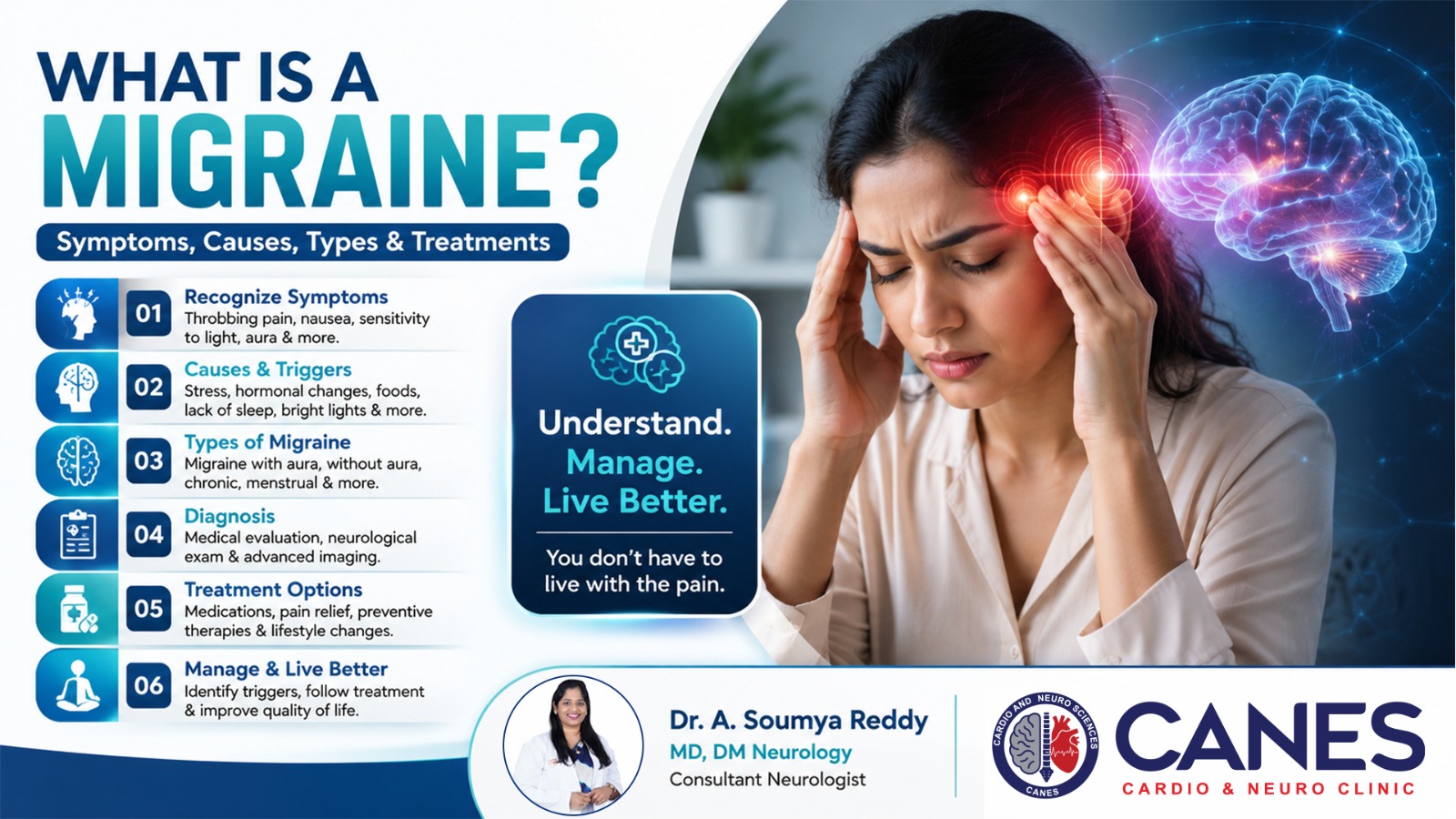
Have you ever experienced a throbbing, pounding headache that leaves you highly sensitive to light, nauseous, and entirely unable to function? If you find yourself lying in a dark, quiet room asking, “What is a migraine, and why does it hurt so much?” you are far from alone. This severe neurological condition affects more than a billion people worldwide, turning productive days into painful struggles.
When debilitating head pain disrupts your daily life, securing an accurate diagnosis and an effective treatment plan is crucial. At CANES Cardio & Neuro Clinic widely recognized as the best heart and brain clinic in Hyderabad we specialize in advanced pain management and neurological care. Led by Dr. Soumya Reddy, the best neurologist in Hyderabad, we help patients uncover their specific triggers and reclaim their lives.
In this comprehensive guide, we will answer the question of what is a migraine, explore its primary symptoms, uncover the root causes, define the different types, and outline the most effective treatments available.
1. Understanding the Basics: What Is a Migraine?
To properly answer what is a migraine, we must first clarify what it is not. A migraine is not just a “bad headache.” It is a complex, chronic neurological disease that involves altered nerve pathways, fluctuating brain chemicals, and restricted blood flow.
While a standard tension headache causes mild to moderate dull pain across the forehead, a migraine attack typically causes severe, pulsating, or throbbing pain, usually localized to one side of the head. Furthermore, these attacks are often accompanied by a cascade of systemic physical symptoms that can last anywhere from four hours to several days if left untreated.
2. The 4 Phases and Common Symptoms of a Migraine
The symptoms of this condition can be confusing because an attack actually occurs in four distinct phases. Not everyone experiences all four stages, but understanding them is key to recognizing the onset.
1. Prodrome (Pre-headache): One or two days before the attack, you may notice subtle changes warning of an impending migraine, such as mood swings, food cravings, neck stiffness, or frequent yawning.
2. Aura: For some, an aura occurs before or during the headache. Auras are reversible nervous system symptoms, primarily visual. You might see flashes of light, zigzag vision, or experience tingling in your hands and face.
3. The Attack phase: This is when the severe pain hits. Symptoms during this phase include:
Throbbing or pulsing pain, usually on one side of your head.
Extreme sensitivity to light, sounds, and sometimes smells.
Severe nausea and vomiting.
Blurred vision and lightheadedness.
4. Postdrome (Migraine Hangover): After the attack, you might feel drained, confused, and physically exhausted for up to a day.
3. Uncovering the Root Causes and Triggers
Another crucial aspect of asking what is a migraine involves understanding why they happen. While the exact, singular cause of migraines is still not fully understood by medical science, genetics and environmental factors appear to play a major role. Imbalances in brain chemicals including serotonin, which helps regulate pain in your nervous system are highly involved.
More importantly, attacks are usually set off by specific “triggers.” Common triggers include:
1. Hormonal Changes: Fluctuations in estrogen often trigger migraines in women.
2. Stress: High levels of stress at work or home are massive catalysts.
3. Dietary Triggers: Aged cheeses, salty foods, processed meats, and artificial sweeteners (like aspartame) are common culprits.
4 Sleep Changes: Missing sleep or getting too much sleep can trigger an episode.
5. Sensory Overload: Bright lights, sun glare, and loud sounds can induce severe pain.
4. Exploring the Different Types of Migraines
Migraines are not a one-size-fits-all condition. The best neurologist in Hyderabad will first identify which specific type you are suffering from to tailor your care:
1. Migraine with Aura (Classic Migraine): Includes visual or sensory disturbances before the pain begins.
2. Migraine without Aura (Common Migraine): The pain hits without any prior sensory warning signs.
3. Chronic Migraine: When you experience a headache on 15 or more days a month, with at least 8 of those having migraine features.
4. Menstrual Migraine: Attacks that are directly linked to a woman’s menstrual cycle and hormonal shifts.
The Best Treatments and Management at CANES Clinic
While there is no absolute cure, modern medicine offers highly effective ways to manage the frequency and severity of attacks. Treatment generally falls into two broad categories:
Abortive (Acute) Treatments
These are taken during migraine attacks and are designed to stop symptoms immediately. They include over-the-counter pain relievers, prescription Triptans (which block pain pathways in the brain), and anti-nausea medications.
Preventive Treatments
If you have severe, frequent attacks, preventive medications are taken daily to reduce their frequency and severity. These can include blood pressure-lowering medications, antidepressants, anti-seizure drugs, and even Botox injections, which have proven highly effective for chronic cases.
At the best heart and brain clinic in Hyderabad, Dr. Soumya Reddy works closely with every patient to create a personalized “Migraine Action Plan.” By tracking your triggers and utilizing the latest neurological therapies, we help you take control of your health.
Don’t let head pain steal another day of your life.
📍 Location: 3rd Floor, Tapasavi Commercial Complex, Hi-Tension Rd, Kondapur, Hyderabad
📞 Call Us: +91 9014944654
🌐 Book an Appointment: https://canesclinic.com/
Frequently Asked Questions (FAQs)
Expert Care
Hyderabad's leading Cardio & Neuro specialists.