
Lipoprotein(a): The Hidden Cholesterol Risk Factor You Should Know About
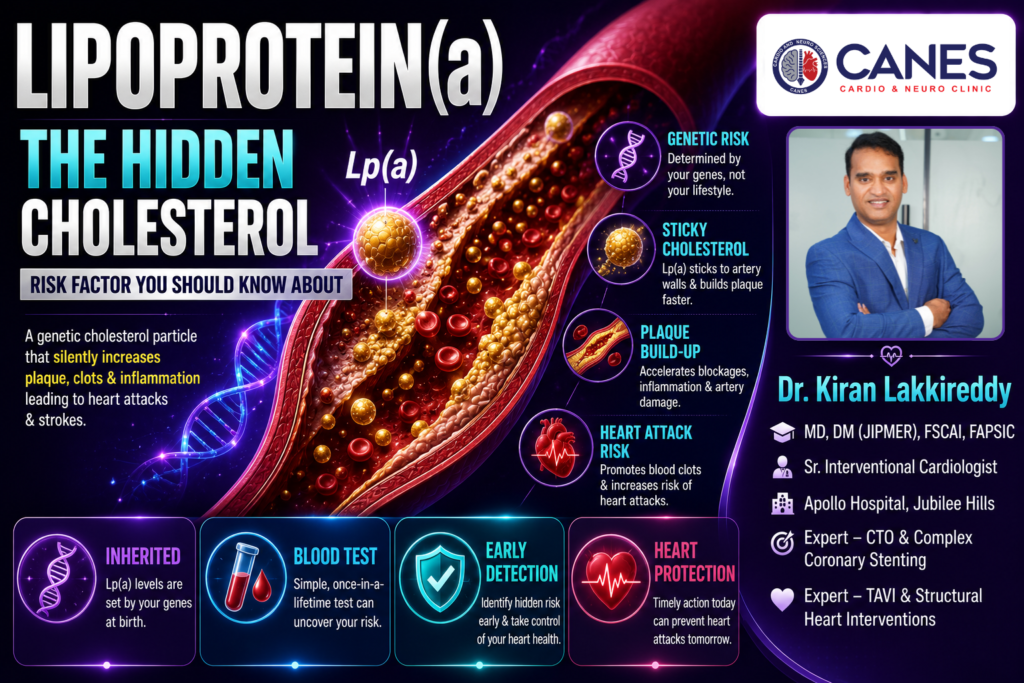
● Lifestyle & Prevention Lipoprotein(a): The Hidden Cholesterol Risk Factor You Should Know About Table of Contents Introduction What Is Lipoprotein(a)? Why Do Some Healthy People Get Heart Attacks? How Does Lipoprotein(a) Cause Heart Attacks? When Should You Speak to a Cardiologist About Lipoprotein(a)? What Is Considered a High Lipoprotein(a) Level? Should I Be More Concerned About My Lp(a) Levels or My LDL Cholesterol? Can Lifestyle Changes Lower Lipoprotein(a)? Can Medications Reduce Lipoprotein(a)? Myth vs. Fact: Understanding Lipoprotein(a) Advanced Preventive Cardiology at CANES Clinic FAQs Book a Consultation Prevention is better than cure. Talk to our specialists today. Book Now Heart attacks are traditionally linked to well-known lifestyle factors like high blood pressure, smoking, diabetes, and a poor diet. However, there is another critical, largely invisible factor that many patients and even some doctors overlook: Lipoprotein(a). Commonly referred to as Lp(a), this unique type of cholesterol particle is determined almost entirely by your genetics, not by what you eat. It is incredibly frustrating for patients who lead a perfectly healthy lifestyle, exercise daily, and maintain normal weight to suddenly suffer a cardiovascular event. Often, an overlooked contributor to these sudden emergencies is elevated Lipoprotein(a). Understanding this hidden risk factor is essential for identifying vulnerable individuals much earlier in life and preventing serious, unexpected cardiovascular events. At CANES Cardio & Neuro Clinic, a specialized center for preventive cardiovascular care in Hyderabad, we believe in providing our patients with the most comprehensive metabolic screening available. Guided by Dr. Kiran Lakkireddy, an experienced interventional cardiologist, our goal is to help you uncover your true cardiovascular risk. In this clear, evidence-based guide, we will explain exactly what Lp(a) is, why it threatens otherwise healthy people, and the modern medical protocols used to manage it. Quick Answer Lipoprotein(a) is a highly dangerous, genetically inherited type of cholesterol that significantly accelerates plaque buildup, blood clotting, and inflammation in the arteries. Unlike standard “bad” cholesterol (LDL), Lp(a) levels cannot be lowered by traditional diet or exercise. Identifying high levels through a simple, once-in-a-lifetime blood test allows cardiologists to aggressively manage your overall heart health and prevent early heart attacks and strokes. What Is Lipoprotein(a)? Lipoprotein(a), pronounced “Lipoprotein little a,” is a specialized, cholesterol-carrying particle in the blood that consists of an LDL (bad cholesterol) molecule attached to an extra, highly sticky protein called apolipoprotein(a). This unique structure makes it much more dangerous to the arteries than standard cholesterol. Key Takeaway: The extra sticky protein attached to Lp(a) allows it to easily bind to blood vessel walls, rapidly accelerating the formation of dangerous blockages. Quick Answer To understand why this specific particle is so concerning, you have to look at its biological structure. Lipoprotein(a) is essentially a standard LDL cholesterol molecule that has been genetically modified. It carries an extra protein loop called apolipoprotein(a). This added protein completely changes how the molecule behaves inside your cardiovascular system. Standard LDL cholesterol causes harm over many decades. However, the extra protein on Lp(a) makes the particle highly adhesive. It acts like molecular velcro, readily sticking to the inner lining of your arteries and rapidly dumping its cholesterol payload. Furthermore, because the size and amount of Lp(a) in your blood are dictated entirely by the genes you inherited from your parents, your levels are determined at birth and remain relatively stable throughout your entire life. Cholesterol Particles At a Glance Particle Type Primary Function Clinical Impact LDL Transports fat to cells. Forms slow-growing plaques; heavily influenced by diet. HDL Transports fat back to the liver. Protects arteries; acts as a microscopic cleaning system. Lipoprotein(a) Genetically altered LDL. Highly sticky; accelerates rapid plaque growth and blood clots. Why Do Some Healthy People Get Heart Attacks? Many healthy individuals suffer unexpected heart attacks because they have inherited high levels of Lipoprotein(a), which silently damages their arteries over many years despite normal blood pressure, a healthy weight, and regular exercise. Key Takeaway: If you have a strong family history of premature heart disease but live a healthy lifestyle, high Lp(a) is frequently the undetected genetic culprit. Key Takeaway: The extra sticky protein attached to Lp(a) allows it to easily bind to blood vessel walls, rapidly accelerating the formation of dangerous blockages. Quick Answer One of the most confusing scenarios in cardiology is the patient who does everything right—they do not smoke, they run marathons, and they eat a strict, plant-based diet—yet they still require a stent at age 45. Traditional cholesterol panels (which only measure total cholesterol, standard LDL, HDL, and triglycerides) will often show perfectly normal numbers for these patients. Because a standard lipid panel does not automatically check for Lipoprotein(a), this hidden risk factor remains invisible. The high levels of Lp(a) silently and aggressively drive inflammation and plaque formation inside the coronary arteries for decades without causing a single physical symptom. It is only when the plaque eventually ruptures and causes a heart attack that the underlying genetic risk is finally investigated. How Does Lipoprotein(a) Cause Heart Attacks? Lipoprotein(a) directly causes heart attacks through a dangerous three-step mechanism: it rapidly builds cholesterol plaques, creates severe inflammation inside the artery wall, and chemically promotes the formation of blood clots. Key Takeaway: Lp(a) is a triple threat to your cardiovascular system, simultaneously blocking the artery, irritating the tissue, and encouraging sudden blood clots. Quick Answer Lp(a) contributes to severe, early-onset heart disease through three highly specific biological mechanisms: Accelerated Plaque Formation: Because of its sticky nature, Lp(a) easily penetrates the delicate inner lining of the blood vessels. Once inside, it deposits heavy amounts of cholesterol, narrowing the blood vessel much faster than standard LDL. Vascular Inflammation: The unique structure of Lp(a) carries oxidized, inflammatory molecules directly into the artery wall. This chronic irritation makes the existing plaques highly unstable and prone to sudden rupturing. Blood Clot Promotion: The extra protein on Lp(a)—apolipoprotein(a)—structurally mimics a natural protein in your body that breaks down blood clots. Because it looks similar, it blocks the body’s natural clot-dissolving process. Therefore, if a plaque tears, a blood clot
Understanding Good and Bad Cholesterol: How They Affect Your Risk of Heart Attack
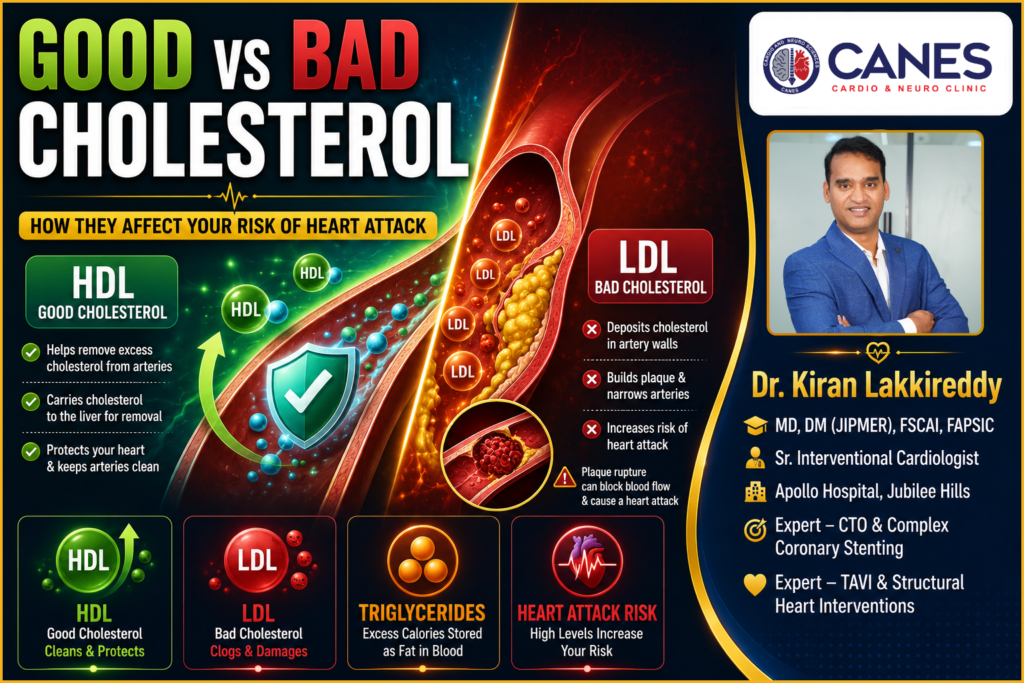
● Lifestyle & Prevention Understanding Good and Bad Cholesterol: How They Affect Your Risk of Heart Attack Table of Contents Introduction What Is Cholesterol? What Is the Difference Between Good and Bad Cholesterol? How Cholesterol Levels Affect Heart Risk Should I Be More Concerned About My Cholesterol Numbers or My Overall Risk? What Are Triglycerides and Why Do They Matter? How Does High Cholesterol Cause a Heart Attack? Who Is at Risk for High Cholesterol? How Can You Lower Your Cholesterol Naturally? When Are Cholesterol Medications Necessary? Expert Preventive Cardiology at CANES Clinic FAQs Book a Consultation Prevention is better than cure. Talk to our specialists today. Book Now Heart disease remains one of the leading causes of death worldwide, and one of the most critical, yet frequently misunderstood, risk factors is abnormal lipid levels in your blood. When you receive your blood test results, the numbers can be incredibly confusing. Understanding the exact difference between good and bad cholesterol is the first and most important step toward protecting your arteries and preventing a sudden cardiac emergency. At CANES Cardio & Neuro Clinic, an advanced center for preventive cardiovascular care in Hyderabad, we prioritize clear, actionable patient education. Guided by Dr. Kiran Lakkireddy, an experienced interventional cardiologist, our goal is to help you decipher your lab results and understand exactly how they impact your long-term health. In this comprehensive guide, we will break down the science of cholesterol, explore how it directly causes heart attacks, and provide evidence-based strategies to naturally improve your numbers. Quick Answer Good and bad cholesterol play opposite roles in your body: good cholesterol (HDL) acts as a scavenger that removes fat from your bloodstream, while bad cholesterol (LDL) deposits fat into your artery walls. Over time, high levels of bad cholesterol create hard plaques that narrow the arteries, drastically increasing your risk of a sudden heart attack. Managing this balance through diet, exercise, and targeted medication is the most effective way to protect your cardiovascular system. Cholesterol At a Glance To quickly understand your lipid profile, here is exactly what each marker does inside your body. Marker Why It Matters LDL (Bad Cholesterol) Increases dangerous plaque buildup and blocks arteries. HDL (Good Cholesterol) Scavenges and removes excess cholesterol, protecting blood vessels. Triglycerides Stores excess energy from food; high levels increase cardiovascular risk. Total Cholesterol Provides a combined, overall measurement of your lipid health. What Is Cholesterol? Cholesterol is a waxy, fat-like substance that is naturally produced by your liver and also obtained from certain foods in your diet. It is an essential building block for your body, but excessive amounts circulating in your blood can become highly dangerous. Key Takeaway: Cholesterol is absolutely necessary for human survival, but having too much of it specifically the bad kind leads to severe arterial complications over time. While cholesterol often gets a bad reputation, your body actually requires it to function. It is vital for building healthy, flexible cell membranes and producing essential hormones like estrogen, testosterone, and cortisol. Furthermore, it helps manufacture vitamin D when your skin is exposed to sunlight and produces bile acids for healthy digestion. Since cholesterol is a fat (lipid), it cannot dissolve in your watery blood. To travel through your bloodstream, it must be carried by specialized microscopic vehicles called lipoproteins. The type of lipoprotein carrying the cholesterol dictates whether it will help or harm your heart. What Is the Difference Between Good and Bad Cholesterol? The primary difference lies in their function: Low-Density Lipoprotein (LDL) deposits fat into your artery walls (bad cholesterol), while High-Density Lipoprotein (HDL) carries excess fat back to the liver for disposal (good cholesterol). Key Takeaway: You want your LDL levels to be low to prevent artery blockages, and your HDL levels to be high to help keep your blood vessels clean. To fully grasp your cardiovascular risk, you must understand the opposing roles these lipoproteins play: LDL – The “Bad” Cholesterol When you have high levels of LDL circulating in your blood, it begins to seep into the inner walls of your arteries. Over many years, these deposits harden and form plaques, a dangerous condition known as atherosclerosis. As these plaques grow, they narrow and stiffen the arteries, severely restricting the flow of oxygen-rich blood to your heart muscle. HDL – The “Good” Cholesterol HDL cholesterol performs the exact opposite function. It travels through your bloodstream acting like a microscopic cleaning system. HDL absorbs excess cholesterol from your blood and actively pulls it out of artery walls, transporting it back to your liver where it is safely flushed out of your body. How Cholesterol Levels Affect Heart Risk Your specific LDL number directly correlates to your risk of developing cardiovascular disease; as the concentration of LDL in your blood rises, the speed at which plaque forms in your arteries accelerates. Key Takeaway: Lower is always better when it comes to LDL. If you have a history of heart issues, your cardiologist will want this number kept strictly in the optimal range. When reviewing your lipid panel, cardiologists use specific categories to determine how aggressively to treat your cholesterol. LDL Risk Category Scale LDL Level (mg/dL) Risk Category Clinical Action Below 100 Optimal Ideal for healthy adults; high-risk patients need it < 70. 100 – 129 Near Optimal Monitor closely; improve diet and exercise. 130 – 159 Borderline High Lifestyle interventions required; medication considered. 160 – 189 High High risk for plaque buildup; statins usually prescribed. 190 and Above Very High Critical risk level; aggressive medical intervention needed. Should I Be More Concerned About My Cholesterol Numbers or My Overall Risk? A mildly elevated cholesterol level may actually be less concerning than a combination of other active threats like diabetes, smoking, high blood pressure, and a strong family history of heart disease. Your cardiologist looks at your entire metabolic picture, not just one isolated number. Key Takeaway: High cholesterol is just one piece of the puzzle. Managing your overall cardiovascular risk profile is far more important