
Why Heart Failure in Young Indians is Rising: 5 Crucial Insights
Table of Contents
- Introduction
- 1. Understanding Heart Failure in Simple Terms
- 2. What Makes the Indian Population Different?
- 3. 5 Crucial Reasons for the Rise in Early Heart Failure
- 4. Symptoms You Should Never Ignore
- 4. Prevention: Taking Control of Your Heart Health
- 4. Expert Care at CANES Cardio & Neuro Clinic
- FAQs
Book a Consultation
Prevention is better than cure. Talk to our specialists today.
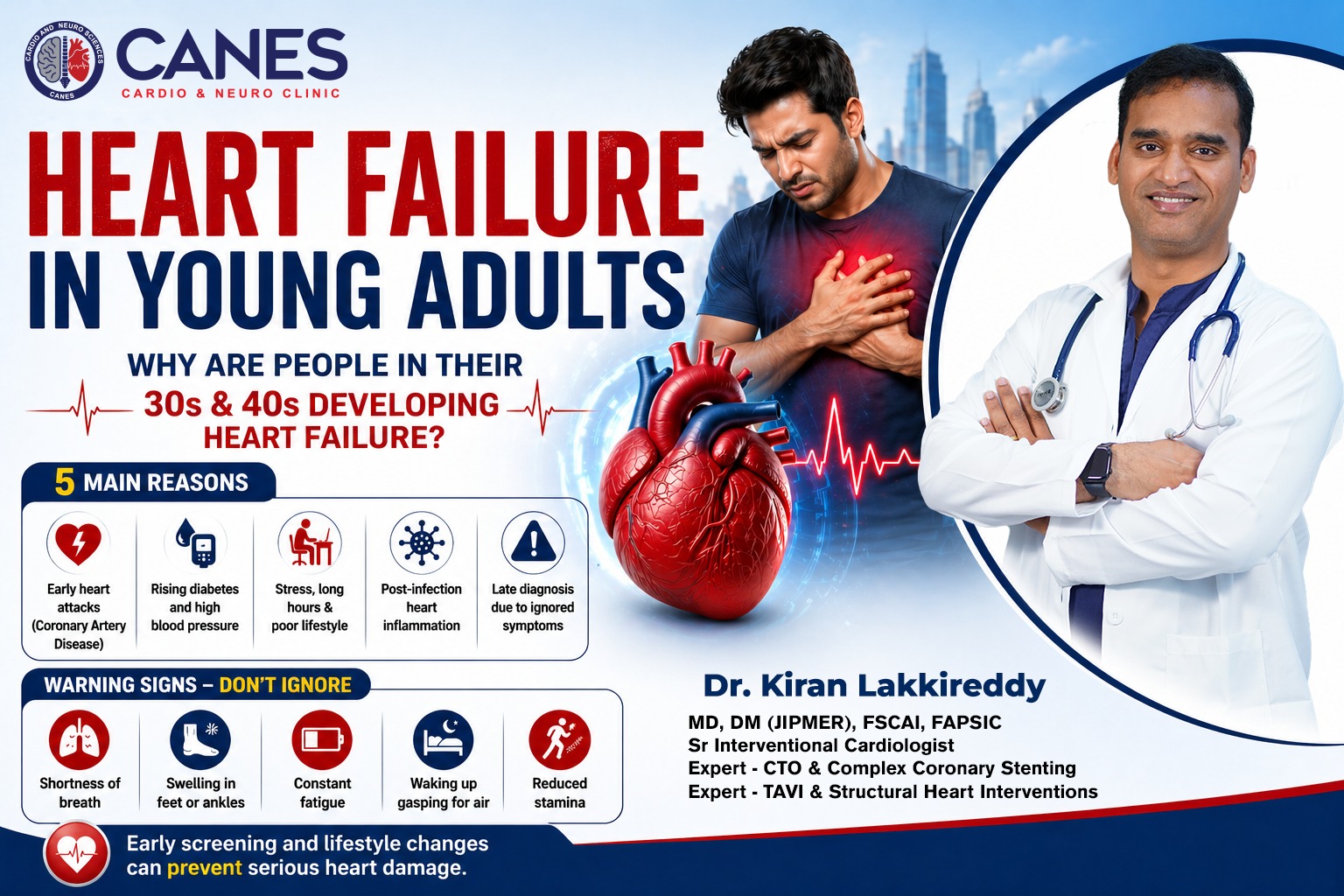
Over the past few years, a startling trend has emerged within the walls of my cardiology practice. I am increasingly seeing patients with severely weakened heart function who are still in the prime of their lives—many in their early 30s and 40s. While heart disease was once considered a condition of the elderly, Heart Failure in Young Indians is becoming a modern health crisis that we can no longer afford to ignore.
At CANES Cardio & Neuro Clinic in Kondapur, Hyderabad, we are committed to moving beyond just treating symptoms. We believe in understanding the “why” behind the numbers. In this master guide, Dr. Kiran Lakkireddy, Senior Interventional Cardiologist, explores the unique factors driving this shift and what you can do to protect your future.
1. Understanding Heart Failure in Simple Terms
A common misconception is that heart failure means the heart has stopped working entirely. In medical terms, it means the heart is no longer pumping efficiently enough to meet the body’s metabolic needs.
2. What Makes the Indian Population Different?
Statistics show that the “Indian Phenotype” differs significantly from Western populations. In India, cardiovascular diseases tend to occur:
1.Nearly 10 years earlier than in Europe or North America.
2.With more aggressive progression, often leading to complications at a younger age.
3. In individuals who appear “fit,” but harbor hidden metabolic risks.
This premature onset is the primary reason why Heart Failure in Young Indians is a growing concern for healthcare providers across the country.
5 Crucial Reasons for the Rise in Early Heart Failure
1. Early-Onset Coronary Artery Disease (CAD)
The most common cause of a weakened heart is a prior heart attack. We are seeing a massive spike in young patients with significant arterial blockages. Even without obvious external risk factors, genetic predispositions and high levels of Lipoprotein(a) can lead to early plaque buildup. A single heart attack in your 30s can leave behind permanent scar tissue, significantly reducing the heart’s pumping capacity.
2. The Rapid Rise of "Young" Diabetes and Hypertension
India is often called the diabetes capital of the world. High blood sugar and uncontrolled blood pressure are no longer “old age” problems; they are increasingly diagnosed in people in their 20s. Chronic hypertension forces the heart to pump against higher resistance, causing the muscle to thicken and eventually fail.
3. Lifestyle Factors and "Hustle Culture"
The modern Indian workspace often demands long hours, leading to:
1. Sedentary Behavior: Minimal physical movement for 10+ hours a day.
2. High-Stress Environments: Chronic cortisol spikes that damage the vascular lining.
3. Poor Nutrition: Dependence on high-sodium, processed “convenience” foods.
4. Sleep Deprivation: The heart’s primary time for repair is during deep sleep.
4. Post-Infection and Inflammatory Effects
In the wake of recent global viral outbreaks, we have observed a higher incidence of myocarditis (inflammation of the heart muscle). This inflammation can weaken the heart rapidly, sometimes leading to acute heart failure in individuals who had no prior history of cardiac issues.
5. The Danger of Late Diagnosis
Perhaps the biggest challenge is the “it won’t happen to me” mindset. Young adults often dismiss fatigue or mild breathlessness as “just stress” or “being out of shape.” By the time they seek medical help, the heart function may have already dropped to dangerous levels.
Symptoms You Should Never Ignore
| Symptom | What It Might Indicate |
| Breathlessness | Fluid buildup in the lungs (pulmonary edema). |
| Swollen Ankles/Feet | The heart is struggling to pump blood back from the lower body. |
| Persistent Fatigue | Low cardiac output means muscles aren’t getting enough oxygen. |
| Paroxysmal Nocturnal Dyspnea | Waking up gasping for air shortly after falling asleep. |
Prevention: Taking Control of Your Heart Health
“Prevention is not just better than a cure; in the case of heart failure, it is the only way to ensure a full, active lifespan.” — Dr. Kiran Lakkireddy
To prevent Heart Failure in Young Indians, we recommend the following protocol:
Know Your Numbers: Get a baseline screening for BP, Sugar, and Cholesterol by age 25.
Screen Early: If you have a family history of heart disease, consider a 2D Echo or TMT (Treadmill Test) early.
Prioritize Movement: 30 minutes of aerobic exercise daily can reverse early arterial stiffening.
Manage Stress: Practice mindfulness or yoga to lower your resting heart rate.
Expert Care at CANES Cardio & Neuro Clinic
At CANES Clinic, we utilize state-of-the-art diagnostics and personalized treatment plans to identify risks before they become life-altering events. Whether you need a routine check-up or advanced management for established heart conditions, our team is here to guide you.
Don’t ignore the warning signs. Your heart deserves a chance to heal.
📍 Location: 3rd Floor, Tapasavi Commercial Complex, Hi-Tension Rd, Kondapur, Hyderabad 📞 Call Us: +91 9014944654 🌐 Book Online: https://canesclinic.com/
Frequently Asked Questions (FAQs)
Expert Care
Hyderabad's leading Cardio & Neuro specialists.