
What Is the MitraClip Procedure? 7 Benefits, Risks & Recovery Explained
Table of Contents
- Introduction
- 1. Understanding the Problem: What is Mitral Valve Regurgitation?
- 2. How Does the MitraClip Procedure Work?
- 3. 7 Major Benefits of the MitraClip Procedure
- 4. Potential Risks and Complications
- 5. Recovery: What to Expect After Your MitraClip Procedure
- FAQs
Book a Consultation
Prevention is better than cure. Talk to our specialists today.
For individuals suffering from a leaky heart valve, the physical toll can be exhausting. Simple activities like climbing stairs or walking to the mailbox can leave you breathless and severely fatigued. In the past, the only way to fix this issue was through highly invasive open-heart surgery. Today, however, cardiovascular medicine offers a groundbreaking, minimally invasive alternative.
If you have been diagnosed with mitral valve regurgitation, you are likely asking: what exactly is the MitraClip Procedure?
At CANES Cardio & Neuro Clinic, recognized as a leading heart and brain clinic in Hyderabad, we are dedicated to bringing the latest cardiac innovations to our patients. Guided by Dr. Kiran Lakkireddy, a top cardiologist in Hyderabad, we help high-risk patients repair their hearts without the trauma of traditional surgery. In this comprehensive guide, we will explain how this procedure works, its incredible benefits, potential risks, and what to expect during recovery.
1. Understanding the Problem: What is Mitral Valve Regurgitation?
To understand the MitraClip Procedure, you first need to understand the mitral valve. This valve is located between the heart’s two left chambers (the left atrium and left ventricle). Its job is to act like a one-way door, opening to let oxygen-rich blood flow in, and tightly closing to prevent it from flowing backward.
When someone has mitral valve regurgitation, the two flaps (leaflets) of this valve do not close completely. As a result, blood leaks backward into the lungs every time the heart pumps. This forces the heart to work twice as hard to push blood to the rest of the body, eventually leading to severe heart failure if left untreated.
2. How Does the MitraClip Procedure Work?
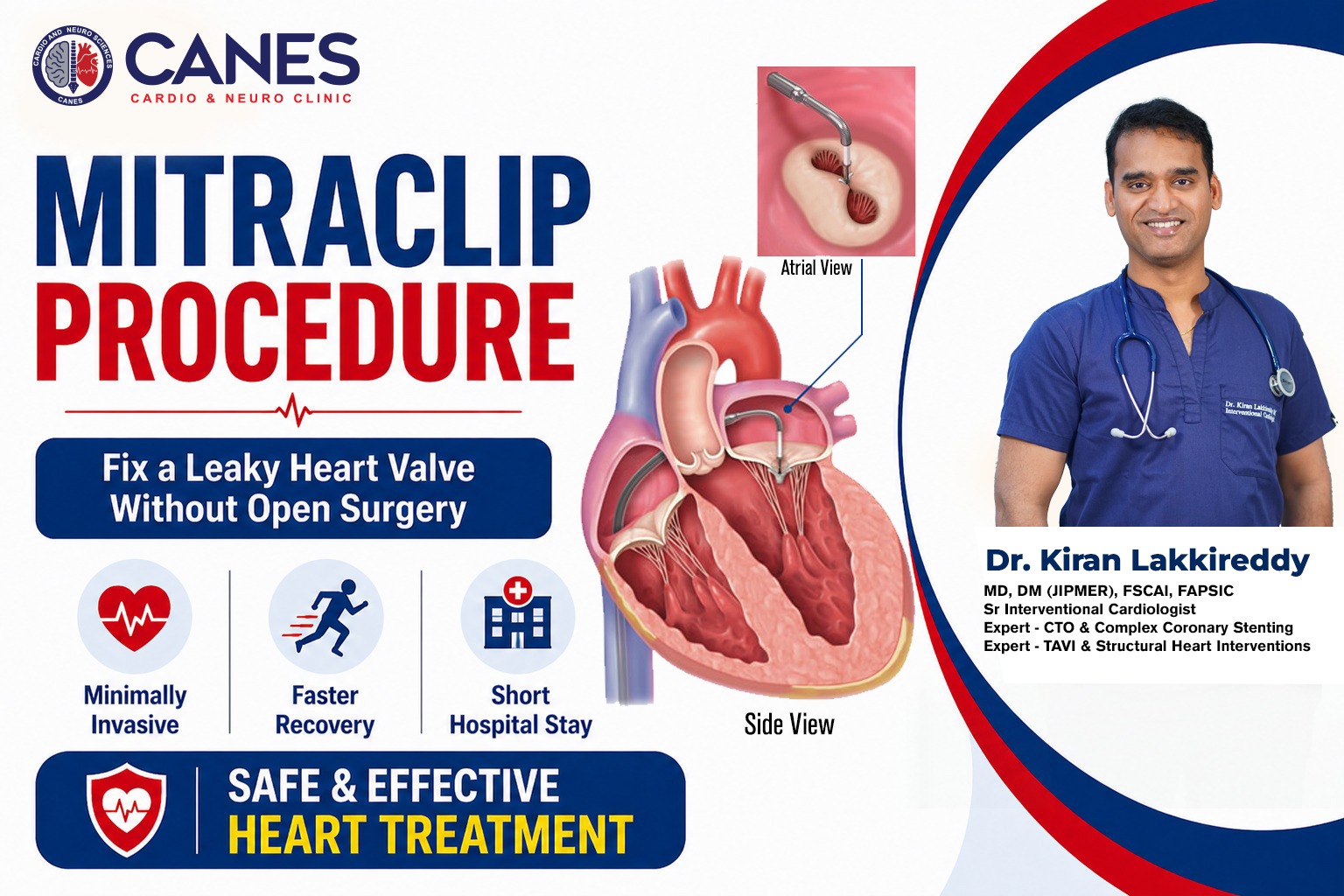
The MitraClip Procedure is a transcatheter edge-to-edge repair (TEER). This means the cardiologist repairs the valve without ever opening the patient’s chest.
During the treatment, the doctor makes a tiny puncture in a large vein in your groin (the femoral vein). A long, flexible tube called a catheter is carefully guided up to your heart using advanced ultrasound and X-ray imaging. The MitraClip a tiny device about the size of a dime is passed through this tube.
The device functions just like a miniature clothespin. The cardiologist uses it to grasp the two floppy flaps of the leaking mitral valve and clip them firmly together in the center. This creates a secure, bow-tie-shaped opening that allows blood to flow forward while stopping the dangerous backward leak.
3. 7 Major Benefits of the MitraClip Procedure
Choosing the MitraClip Procedure offers a multitude of advantages, particularly for elderly patients or those too fragile for open-heart surgery.
1. Minimally Invasive: Because it relies on a catheter, there is no need to saw through the breastbone or stop the heart.
2. Rapid Symptom Relief: Patients often notice an immediate improvement in their breathing and energy levels as soon as they wake up.
3. Shorter Hospital Stay: The average hospital stay is only 1 to 3 days, compared to the week or more required for open-heart surgery.
4. Accelerated Recovery: Most patients return to their normal, light daily activities within a week.
5. Lower Surgical Risk: It is a life-saving option for high-risk patients who were previously considered “inoperable.”
6. Reduced Hospitalizations: By effectively treating the leak, it drastically reduces future emergency room visits for heart failure complications.
7. Improved Quality of Life: You can finally enjoy a more active, independent lifestyle without the constant burden of severe fatigue.
4. Potential Risks and Complications
While the MitraClip Procedure is remarkably safe, transparency is vital in medical care. Every cardiac intervention carries a degree of risk, which a top cardiologist in Hyderabad will discuss with you.
Potential risks include:
1. Bleeding or Bruising: Minor bleeding at the catheter insertion site in the groin is the most common issue.
2. Device Dislodgement: In extremely rare cases, the clip can detach from one side of the valve leaflet.
3. Infection: As with any hospital procedure, there is a small risk of infection, which is strictly managed with antibiotics.
4. Arrhythmias: Some patients may experience temporary irregular heartbeats as the heart adjusts to its new blood flow dynamics.
5. Recovery: What to Expect After Your MitraClip Procedure
The recovery process for this intervention is refreshingly straightforward.
1. The First 24 Hours: You will be closely monitored in the cardiac intensive care unit. You must keep your leg straight for a few hours to allow the groin puncture to seal.
2. Going Home: Once discharged, you will be given specific instructions. You may experience mild soreness in your groin or a slight sore throat from the ultrasound probe used during the procedure.
3. The First 30 Days: You should avoid heavy lifting, strenuous exercise, and intense straining for about four weeks. However, daily walking is highly encouraged to keep your circulation healthy.
4. Follow-Up: You will return to the clinic for a follow-up echocardiogram so Dr. Kiran Lakkireddy can visually confirm the clip is holding perfectly.
World-Class Cardiac Care at CANES Clinic
Do not let a leaking heart valve rob you of your vitality. At CANES Cardio & Neuro Clinic, a leading heart and brain clinic in Hyderabad, we are fully equipped with the diagnostic tools and clinical expertise required to safely manage complex structural heart disease.
Take the first step toward breathing easier and living better. 📍 Location: 3rd Floor, Tapasavi Commercial Complex, Hi-Tension Rd, Kondapur, Hyderabad
📞 Call Us: +91 9014944654
🌐 Book an Appointment: https://canesclinic.com/
Frequently Asked Questions (FAQs)
Expert Care
Hyderabad's leading Cardio & Neuro specialists.