Understanding Good and Bad Cholesterol: How They Affect Your Risk of Heart Attack
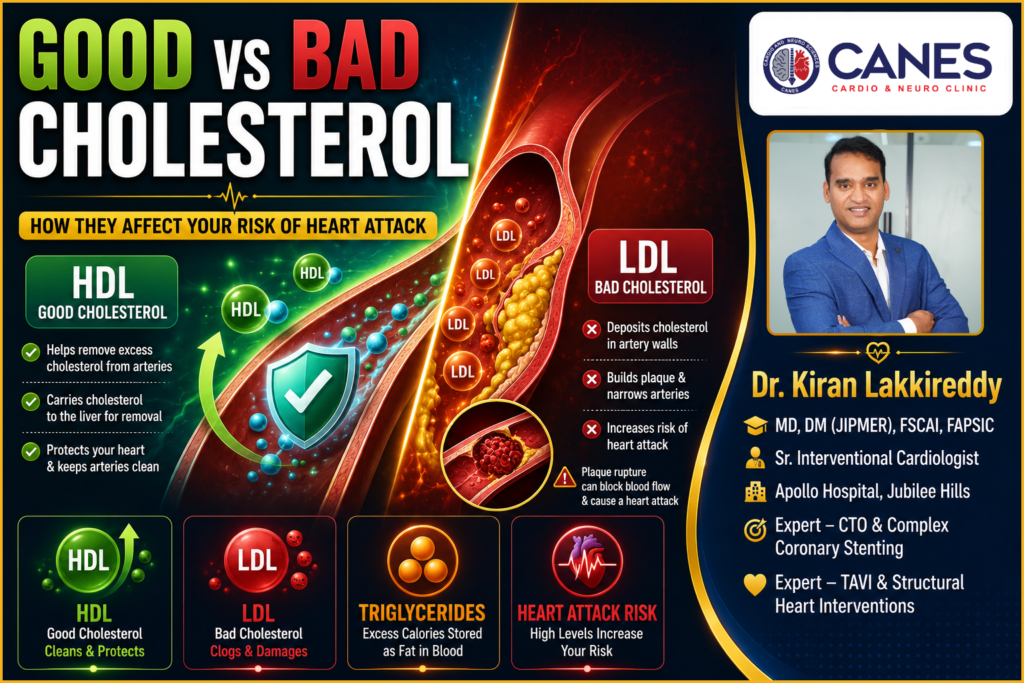
● Lifestyle & Prevention Understanding Good and Bad Cholesterol: How They Affect Your Risk of Heart Attack Table of Contents Introduction What Is Cholesterol? What Is the Difference Between Good and Bad Cholesterol? How Cholesterol Levels Affect Heart Risk Should I Be More Concerned About My Cholesterol Numbers or My Overall Risk? What Are Triglycerides and Why Do They Matter? How Does High Cholesterol Cause a Heart Attack? Who Is at Risk for High Cholesterol? How Can You Lower Your Cholesterol Naturally? When Are Cholesterol Medications Necessary? Expert Preventive Cardiology at CANES Clinic FAQs Book a Consultation Prevention is better than cure. Talk to our specialists today. Book Now Heart disease remains one of the leading causes of death worldwide, and one of the most critical, yet frequently misunderstood, risk factors is abnormal lipid levels in your blood. When you receive your blood test results, the numbers can be incredibly confusing. Understanding the exact difference between good and bad cholesterol is the first and most important step toward protecting your arteries and preventing a sudden cardiac emergency. At CANES Cardio & Neuro Clinic, an advanced center for preventive cardiovascular care in Hyderabad, we prioritize clear, actionable patient education. Guided by Dr. Kiran Lakkireddy, an experienced interventional cardiologist, our goal is to help you decipher your lab results and understand exactly how they impact your long-term health. In this comprehensive guide, we will break down the science of cholesterol, explore how it directly causes heart attacks, and provide evidence-based strategies to naturally improve your numbers. Quick Answer Good and bad cholesterol play opposite roles in your body: good cholesterol (HDL) acts as a scavenger that removes fat from your bloodstream, while bad cholesterol (LDL) deposits fat into your artery walls. Over time, high levels of bad cholesterol create hard plaques that narrow the arteries, drastically increasing your risk of a sudden heart attack. Managing this balance through diet, exercise, and targeted medication is the most effective way to protect your cardiovascular system. Cholesterol At a Glance To quickly understand your lipid profile, here is exactly what each marker does inside your body. Marker Why It Matters LDL (Bad Cholesterol) Increases dangerous plaque buildup and blocks arteries. HDL (Good Cholesterol) Scavenges and removes excess cholesterol, protecting blood vessels. Triglycerides Stores excess energy from food; high levels increase cardiovascular risk. Total Cholesterol Provides a combined, overall measurement of your lipid health. What Is Cholesterol? Cholesterol is a waxy, fat-like substance that is naturally produced by your liver and also obtained from certain foods in your diet. It is an essential building block for your body, but excessive amounts circulating in your blood can become highly dangerous. Key Takeaway: Cholesterol is absolutely necessary for human survival, but having too much of it specifically the bad kind leads to severe arterial complications over time. While cholesterol often gets a bad reputation, your body actually requires it to function. It is vital for building healthy, flexible cell membranes and producing essential hormones like estrogen, testosterone, and cortisol. Furthermore, it helps manufacture vitamin D when your skin is exposed to sunlight and produces bile acids for healthy digestion. Since cholesterol is a fat (lipid), it cannot dissolve in your watery blood. To travel through your bloodstream, it must be carried by specialized microscopic vehicles called lipoproteins. The type of lipoprotein carrying the cholesterol dictates whether it will help or harm your heart. What Is the Difference Between Good and Bad Cholesterol? The primary difference lies in their function: Low-Density Lipoprotein (LDL) deposits fat into your artery walls (bad cholesterol), while High-Density Lipoprotein (HDL) carries excess fat back to the liver for disposal (good cholesterol). Key Takeaway: You want your LDL levels to be low to prevent artery blockages, and your HDL levels to be high to help keep your blood vessels clean. To fully grasp your cardiovascular risk, you must understand the opposing roles these lipoproteins play: LDL – The “Bad” Cholesterol When you have high levels of LDL circulating in your blood, it begins to seep into the inner walls of your arteries. Over many years, these deposits harden and form plaques, a dangerous condition known as atherosclerosis. As these plaques grow, they narrow and stiffen the arteries, severely restricting the flow of oxygen-rich blood to your heart muscle. HDL – The “Good” Cholesterol HDL cholesterol performs the exact opposite function. It travels through your bloodstream acting like a microscopic cleaning system. HDL absorbs excess cholesterol from your blood and actively pulls it out of artery walls, transporting it back to your liver where it is safely flushed out of your body. How Cholesterol Levels Affect Heart Risk Your specific LDL number directly correlates to your risk of developing cardiovascular disease; as the concentration of LDL in your blood rises, the speed at which plaque forms in your arteries accelerates. Key Takeaway: Lower is always better when it comes to LDL. If you have a history of heart issues, your cardiologist will want this number kept strictly in the optimal range. When reviewing your lipid panel, cardiologists use specific categories to determine how aggressively to treat your cholesterol. LDL Risk Category Scale LDL Level (mg/dL) Risk Category Clinical Action Below 100 Optimal Ideal for healthy adults; high-risk patients need it < 70. 100 – 129 Near Optimal Monitor closely; improve diet and exercise. 130 – 159 Borderline High Lifestyle interventions required; medication considered. 160 – 189 High High risk for plaque buildup; statins usually prescribed. 190 and Above Very High Critical risk level; aggressive medical intervention needed. Should I Be More Concerned About My Cholesterol Numbers or My Overall Risk? A mildly elevated cholesterol level may actually be less concerning than a combination of other active threats like diabetes, smoking, high blood pressure, and a strong family history of heart disease. Your cardiologist looks at your entire metabolic picture, not just one isolated number. Key Takeaway: High cholesterol is just one piece of the puzzle. Managing your overall cardiovascular risk profile is far more important
How to Start a Healthy Diet: A Simple Way to Prevent Chronic Diseases
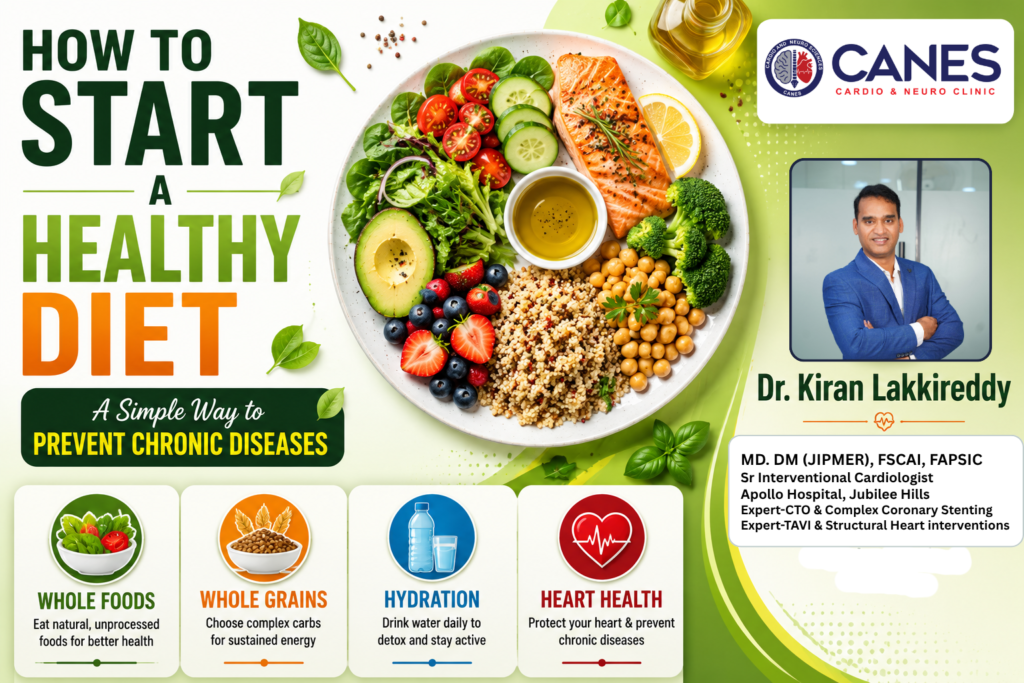
● Lifestyle & Prevention How to Start a Healthy Diet: A Simple Way to Prevent Chronic Diseases Table of Contents Introduction What Is a Healthy Diet and Why Is It Important? What Are the Core Principles of a Healthy Diet? What Does a Healthy Diet Plate Look Like? Why Are Whole Grains Better Than Refined Grains? Why Is High Sodium Intake Dangerous for the Heart? What Is Mindful Eating and How Does It Help? What Is the Mediterranean Diet? Is the Mediterranean Diet Good for Diabetes? Can a Healthy Diet Reverse High Cholesterol? What Foods Should Be Avoided Completely? How Long Does It Take to See Results From a Healthy Diet? When Should You Seek Medical Attention for Your Diet? Advanced Preventive Cardiology at CANES Clinic FAQs Book a Consultation Prevention is better than cure. Talk to our specialists today. Book Now Making the decision to change the way you eat is one of the most powerful choices you can make for your long-term health. However, with so much conflicting nutritional advice available online, figuring out exactly how to start a healthy diet can feel overwhelming. Many people assume that eating well requires restrictive, miserable meal plans or highly expensive specialty foods. The medical reality is actually much simpler. A healthy diet is not about strict limitations; it is about making sustainable, nutrient-rich choices that fuel your body and actively protect your heart, brain, and vascular system. What you put on your plate every day plays a crucial, direct role in either fueling or preventing chronic illnesses like heart disease, diabetes, and hypertension. At CANES Cardio & Neuro Clinic, recognized as a leading clinic for advanced cardiovascular care in Hyderabad, we believe in providing our patients with clear, practical, and evidence-based nutritional guidance. Guided by Dr. Kiran Lakkireddy, an experienced and highly trusted cardiologist, our team emphasizes that food is a powerful form of preventive medicine. In this comprehensive guide, we will break down the foundational principles of a healthy diet, explore the highly acclaimed Mediterranean lifestyle, and provide actionable steps to help you protect your health for decades to come. Quick Answer Starting a healthy diet involves prioritizing nutrient-dense whole foods like vegetables, fruits, lean proteins, and healthy fats while minimizing processed items, refined sugars, and excess sodium. Adopting a structured pattern like the Mediterranean diet helps prevent chronic diseases by lowering systemic inflammation, optimizing blood pressure, and naturally managing cholesterol levels to shield the cardiovascular system. What Is a Healthy Diet and Why Is It Important? A healthy diet is a balanced pattern of eating that provides your body with the essential vitamins, minerals, fiber, and macronutrients it needs to function optimally. It is critically important because consistent, poor dietary choices directly damage blood vessels, increase dangerous cholesterol levels, and lead to chronic, life-threatening diseases. Key Takeaway: A healthy diet acts as a daily defense system, using nutrients to repair cellular damage and prevent the onset of chronic conditions like obesity, type 2 diabetes, and cardiovascular disease. Detailed Explanation To understand why diet is so important, it helps to think of your body as a highly complex engine. If you consistently put low-quality, contaminated fuel into an engine, the internal parts will eventually corrode, sludge will build up in the pipes, and the engine will break down prematurely. Your cardiovascular system operates on the exact same principle. When you consume a diet high in heavily processed foods, saturated fats, and refined sugars, your body experiences an extended state of inflammation. Over time, this inflammation damages the smooth inner lining of your arteries. Excess cholesterol from unhealthy fats begins to stick to these damaged areas, forming hard plaques that block blood flow—a condition called atherosclerosis. Furthermore, high sodium intake forces your body to retain water, drastically increasing the pressure inside your blood vessels (hypertension). Conversely, when you learn how to start a healthy diet, you are providing your body with the exact tools it needs to repair this damage. Antioxidants from vegetables reduce inflammation, soluble fiber from whole grains sweeps excess cholesterol out of your digestive tract, and healthy fats keep your blood vessels flexible. What Are the Core Principles of a Healthy Diet? The core principles of a healthy diet center on eating unrefined, whole foods in their natural state while maintaining appropriate caloric balance and portion control. This approach ensures your body receives maximum nutritional density with minimal chemical additives, added sugars, or hidden processing fats. Key Takeaway: Shifting from packaged convenience products to single-ingredient whole foods is the most fundamental step in transitioning to a health-promoting dietary routine. Detailed Explanation Transitioning to a healthier lifestyle does not require complex mathematical calculations or calorie tracking. Instead, the focus should rest entirely on food quality and mindful structural choices during your daily routine. A balanced diet incorporates multiple food groups working synergistically to support cellular health. Rather than looking at food as an enemy, a sustainable approach views nutrition as a way to support longevity. This means proactively choosing foods that are rich in vitamins, minerals, and bioactive compounds. By organizing your meals around fresh vegetables, clean proteins, and natural hydration, you automatically crowd out the inflammatory foods that drive metabolic decline. What Does a Healthy Diet Plate Look Like? A healthy diet plate visually distributes food groups to maximize nutrient density, filling half the surface with vegetables and fruits, one-quarter with lean proteins, and one-quarter with complex whole grains. This clean, proportional layout guarantees an abundant intake of fiber and micronutrients while naturally regulating caloric intake. Key Takeaway: Visually managing the proportions of your plate is a simple, highly effective method to maintain portion control and balance your macronutrient intake without weighing your food. Detailed Explanation The structure of your plate dictates your glycemic response and metabolic health after a meal. When half your plate consists of non-starchy vegetables, you consume a high volume of food that is low in calories but rich in antioxidants and water. This volume physically fills the stomach, triggering satiety hormones