High Blood Pressure and Heart Health: How Hypertension Affects Your Heart and How to Control It
Table of Contents
- Introduction
- How Does High Blood Pressure Affect the Heart?
- High Blood Pressure and Heart Health at a Glance
- What Is Blood Pressure?
- Why Is High Blood Pressure Called a "Silent" Condition?
- How Does High Blood Pressure Damage the Heart?
- What Causes High Blood Pressure?
- What Are the Symptoms of High Blood Pressure?
- When Is Very High Blood Pressure an Emergency?
- How Is High Blood Pressure Diagnosed?
- Why Is Home Blood-Pressure Monitoring Useful?
- How Can High Blood Pressure Be Controlled?
- Hypertension and Cardiovascular Guidance at CANES Clinic
- FAQs
Book a Consultation
Prevention is better than cure. Talk to our specialists today.
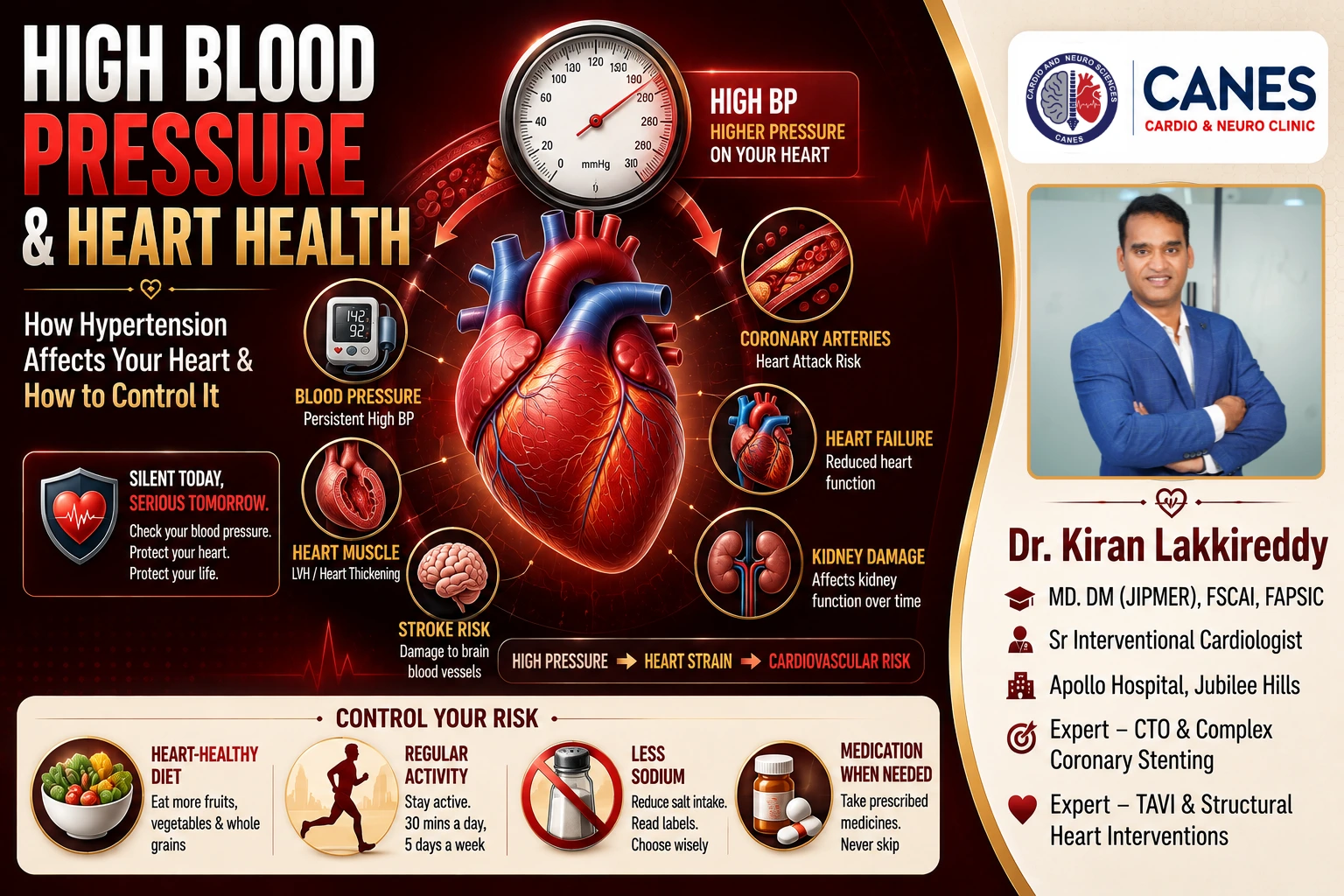
High blood pressure, also called hypertension, is one of the most important modifiable risk factors for cardiovascular disease. The condition often develops quietly, without obvious warning signs, which means a person can have elevated blood pressure for years without realizing that the heart, arteries, kidneys and brain are being placed under additional strain. When blood pressure remains too high over time, the heart has to pump against greater resistance, while the blood vessels are exposed to increased mechanical stress.
The good news is that high blood pressure can often be detected, treated and controlled. Regular blood-pressure measurement, a heart-healthy lifestyle, management of cholesterol and other cardiovascular risk factors, and medication when clinically indicated can substantially reduce the risk of serious complications. Understanding what hypertension does to the heart is therefore not about creating fear; it is about recognizing a manageable risk early enough to do something about it.
At CANES Cardio & Neuro Clinic in Hyderabad, cardiovascular assessment and patient education are important parts of hypertension care. Guided by Dr. Kiran Lakkireddy, the clinical approach emphasizes individualized assessment, understandable explanations and shared decision-making so patients can better understand their cardiovascular risk and treatment options.
Quick Answer
High blood pressure means that the pressure of blood against the artery walls remains higher than it should over time. Persistent hypertension makes the heart work harder and can contribute to changes in the heart muscle, artery disease, coronary artery disease, heart attack, heart failure, stroke, kidney disease and certain forms of aortic disease.
Most people with hypertension do not experience clear symptoms. That is why regular blood-pressure measurement is more reliable than waiting for symptoms. Treatment depends on the individual’s blood-pressure pattern, cardiovascular risk, medical history, kidney function, diabetes status, age, pregnancy status where relevant, and response to lifestyle measures.
How Does High Blood Pressure Affect the Heart?
Think of the heart as a pump and the arteries as the network of pipes through which blood travels. When pressure within that network stays elevated, the heart must generate more force to move blood forward. A single temporarily high reading does not mean that the heart has been damaged, but persistent hypertension over months and years can gradually change both the heart and blood vessels.
One of the most important changes is left ventricular hypertrophy (LVH), in which the muscular wall of the heart’s main pumping chamber becomes thicker. At first, this may be an adaptation to the increased workload. Over time, however, a thickened heart muscle can become stiffer and less efficient at relaxing. This can contribute to problems with how the heart fills and, in some people, eventually contribute to heart failure.
High blood pressure also interacts with other cardiovascular risk factors. A person with hypertension who also has high cholesterol, diabetes, smoking exposure, obesity, kidney disease or a strong family history may have a substantially different overall cardiovascular risk from someone with hypertension alone. That is why effective blood-pressure management should be viewed as one part of a broader strategy for protecting the heart.
High Blood Pressure and Heart Health at a Glance
| Effect of Hypertension | What Can Happen | Why It Matters |
|---|
| Increased workload | The heart pumps against greater resistance | May contribute to heart-muscle thickening |
| Heart-muscle changes | The left ventricle may become thicker or stiffer | Can affect relaxation and filling |
| Artery damage | Blood vessels may become less healthy over time | Contributes to cardiovascular disease |
| Coronary artery disease | Atherosclerotic plaque may develop in coronary arteries | Can cause angina or heart attack |
| Heart failure | The heart may eventually struggle to pump or fill effectively | Can cause breathlessness, fatigue and fluid retention |
| Stroke | Brain blood vessels may become blocked or rupture | Can cause permanent disability or death |
| Kidney damage | Small kidney blood vessels may be injured | Can contribute to chronic kidney disease |
| Aortic disease | Increased pressure can add stress to the aortic wall | May contribute to certain aneurysms or dissections |
What Is Blood Pressure?
During physical activity, the cardiovascular system increases blood flow, making the heart beat faster to deliver more oxygen; with regular aerobic training, the heart adapts and becomes highly efficient at supporting this demand.
Key Takeaway: The goal of exercise is to create a healthy cardiovascular training stimulus, not to push yourself to absolute exhaustion.
With regular aerobic training, the cardiovascular system adapts, improving the heart’s efficiency and your overall exercise capacity. It pumps more blood with every beat, meaning it doesn’t have to work as hard during your normal daily activities.
What Is Systolic Blood Pressure?
The systolic blood pressure is the upper number. It represents the pressure in the arteries when the heart contracts and pumps blood into the circulation.
What Is Diastolic Blood Pressure?
The diastolic blood pressure is the lower number. It represents the pressure in the arteries while the heart relaxes between beats.
For example, a reading of 120/80 mm Hg has a systolic pressure of 120 and a diastolic pressure of 80.
Blood pressure naturally changes throughout the day. Physical activity, stress, pain, caffeine, smoking, sleep and even measurement technique can influence an individual reading. Therefore, one isolated high reading does not necessarily establish a diagnosis of hypertension.
Repeated measurements, home monitoring or ambulatory blood-pressure monitoring may be recommended depending on the circumstances.
Why Is High Blood Pressure Called a "Silent" Condition?
One of the most challenging things about hypertension is that many people feel completely normal while their blood pressure is elevated.
You may exercise regularly, go to work, sleep normally and have no chest pain or headache and still have high blood pressure. This is why symptoms are not a dependable way to determine whether your blood pressure is healthy.
Headaches and dizziness can occur for many reasons and should not be used as a personal blood-pressure test. The practical way to detect hypertension is to measure blood pressure correctly and consistently.
Routine blood-pressure checks are particularly important if you have risk factors such as increasing age, family history, excess body weight, diabetes, kidney disease, physical inactivity, smoking or obstructive sleep apnoea.
How Does High Blood Pressure Damage the Heart?
1. Hypertension Makes the Heart Work Harder
The heart must generate enough pressure to push blood throughout the body’s circulation. When arterial pressure remains elevated, the heart faces greater resistance every time it pumps.
Over time, the left ventricle may respond by becoming thicker. This is called left ventricular hypertrophy, or LVH.
A thicker heart muscle is not necessarily a healthier or stronger heart. As the muscle becomes thicker, it may become less flexible and less efficient at relaxing between contractions. Some people have no symptoms initially, while others may eventually develop reduced exercise tolerance, breathlessness, fatigue, chest discomfort or palpitations.
Controlling blood pressure is therefore important not simply because of the number displayed on a monitor, but because sustained pressure affects the structure and function of the cardiovascular system.
2. Can High Blood Pressure Cause Coronary Artery Disease?
Yes, hypertension is an important risk factor for coronary artery disease.
The coronary arteries supply oxygen-rich blood to the heart muscle. Persistent high blood pressure can contribute to vascular injury and commonly occurs alongside other risk factors such as high cholesterol, diabetes, smoking and obesity.
Over time, atherosclerotic plaque can develop within coronary arteries. If a coronary artery becomes significantly narrowed, a person may experience chest discomfort or angina, particularly during physical activity. If a plaque ruptures and a blood clot suddenly blocks the artery, a heart attack can occur.
Does controlling blood pressure guarantee that a heart attack will never happen? No. Heart attacks have multiple contributing factors, including cholesterol, diabetes, smoking, age, family history, obesity, physical inactivity and established coronary artery disease.
Blood-pressure control is therefore one important part of comprehensive cardiovascular prevention.
3. Can High Blood Pressure Cause Heart Failure?
Long-standing hypertension is an important risk factor for heart failure.
Heart failure does not mean that the heart has stopped. It means that the heart cannot pump or fill efficiently enough to meet the body’s needs.
Hypertension can contribute to heart failure through several pathways. The heart may initially become thicker in response to increased workload. Over time, that muscle can become stiff, making it more difficult for the ventricle to fill normally. In other people, prolonged cardiovascular stress or associated coronary artery disease can eventually weaken the heart’s pumping function.
Possible symptoms of heart failure include:
- Shortness of breath during activity
- Breathlessness when lying down
- Unusual tiredness
- Reduced exercise capacity
- Swelling of the feet, ankles or legs
- Rapid changes in body weight caused by fluid retention
- Persistent cough in some people
- Difficulty performing normal daily activities
These symptoms can have many causes. New or worsening breathlessness, swelling or reduced exercise tolerance should be medically evaluated rather than self-diagnosed.
4. How Does Hypertension Increase Stroke Risk?
The cardiovascular system includes the blood vessels supplying the brain. Persistent hypertension can damage these vessels and is one of the most important modifiable risk factors for stroke.
A stroke may occur when:
- An artery supplying the brain becomes blocked, or
- A blood vessel in the brain ruptures and bleeds.
Possible warning signs include sudden:
- Facial drooping
- Weakness or numbness, particularly on one side
- Difficulty speaking or understanding speech
- Vision changes
- Loss of balance or coordination
- Severe or sudden neurological symptoms
Suspected stroke is an emergency. Do not wait for symptoms to disappear or attempt to treat them at home.
5. Can High Blood Pressure Affect the Aorta?
The aorta is the body’s largest artery and carries blood from the heart to the rest of the circulation.
Persistent hypertension increases mechanical stress on arterial walls and is an important risk factor for certain forms of aortic disease. Other factors can also influence risk, including age, smoking, atherosclerosis, family history, genetics and certain connective-tissue disorders.
What Is an Aortic Aneurysm?
An aortic aneurysm is an abnormal enlargement or bulging of part of the aorta. Many aneurysms produce no symptoms and may be discovered during imaging performed for another reason.
What Is an Aortic Dissection?
An aortic dissection occurs when a tear develops in the inner layer of the aortic wall, allowing blood to enter between the layers of the vessel.
This is a life-threatening emergency.
Sudden severe chest or upper-back pain, fainting, marked breathlessness or other sudden cardiovascular symptoms require immediate emergency assessment.
Importantly, having hypertension does not mean that someone will automatically develop an aneurysm or dissection.
6. Can High Blood Pressure Damage the Kidneys?
The relationship between hypertension and kidney disease works in both directions.
The kidneys help regulate fluid balance and blood pressure. At the same time, persistently elevated blood pressure can damage the small blood vessels inside the kidneys and gradually reduce their filtering ability.
This means hypertension can contribute to chronic kidney disease, while kidney disease can make blood-pressure control more difficult.
Depending on your medical history, your healthcare professional may therefore recommend kidney-function testing as part of hypertension assessment.
7. Why Should Blood Pressure Be Considered With Other Risk Factors?
Blood pressure is only one part of cardiovascular risk.
Other important factors include:
- Cholesterol
- Diabetes
- Smoking
- Body weight
- Physical activity
- Kidney function
- Family history
- Age
- Existing cardiovascular disease
- Diet
- Sleep
- Obstructive sleep apnoea
A person with moderately elevated blood pressure and multiple additional risk factors may require a different approach from someone with similar readings but otherwise low cardiovascular risk.
The goal is therefore not simply to lower one number. The goal is to reduce overall cardiovascular risk while maintaining safe, sustainable blood-pressure control.
What Causes High Blood Pressure?
For many people, there is no single identifiable cause. This is commonly called primary hypertension.
Factors associated with a greater likelihood of developing hypertension include:
- Increasing age
- Family history
- Excess body weight
- Physical inactivity
- High dietary sodium intake
- Smoking or tobacco exposure
- Excessive alcohol consumption
- Diabetes
- Kidney disease
- Obstructive sleep apnoea
- Certain medicines
- Certain medical conditions
A smaller proportion of people have secondary hypertension, meaning their elevated blood pressure results from an identifiable underlying condition or factor.
Additional investigation may be considered when hypertension begins at an unusual age, is particularly severe, is difficult to control, or has other features that raise clinical suspicion.
What Are the Symptoms of High Blood Pressure?
Most people with hypertension have no obvious symptoms.
Very severe blood-pressure elevations can sometimes occur with symptoms such as:
- Severe headache
- Chest pain
- Shortness of breath
- Confusion
- Vision changes
- Neurological symptoms
- Nausea or vomiting
- Dizziness
Symptoms alone cannot tell you whether your blood pressure is high.
If symptoms are severe, sudden or associated with a severely elevated reading, seek appropriate medical care rather than trying to manage the situation yourself.
When Is Very High Blood Pressure an Emergency?
A reading above 180/120 mm Hg is severely elevated.
If you unexpectedly obtain a reading this high, sit quietly and repeat the measurement after at least one minute using correct technique.
If the repeat reading remains above 180/120 mm Hg and you have symptoms such as chest pain, shortness of breath, back pain, weakness, numbness, vision changes or difficulty speaking, seek emergency medical care immediately.
If the reading remains severely elevated without those symptoms, contact a healthcare professional promptly for advice. Do not independently increase, stop or change your medication based on a single reading.
Pregnancy-related hypertension requires separate medical guidance because thresholds and emergency considerations differ.
How Is High Blood Pressure Diagnosed?
Blood pressure changes naturally throughout the day.
An elevated reading can be influenced by:
- Recent physical activity
- Anxiety
- Pain
- Caffeine
- Smoking
- Certain medicines
- Incorrect cuff size
- Incorrect measurement technique
- Other temporary factors
For this reason, healthcare professionals may use repeated clinic measurements, home blood-pressure monitoring or ambulatory blood-pressure monitoring to establish a clearer picture.
Depending on your circumstances, assessment may also include:
- Blood tests
- Urine tests
- Kidney-function testing
- Cholesterol testing
- Blood-sugar testing
- ECG
- Echocardiography or other cardiac testing when appropriate
- Evaluation for secondary causes when clinically indicated
The exact assessment should be individualized.
Why Is Home Blood-Pressure Monitoring Useful?
Home monitoring can provide information that a single clinic reading cannot.
A consistent record can help your healthcare professional understand your usual blood-pressure pattern and determine whether treatment or lifestyle changes are working.
For more reliable readings:
Use a validated blood-pressure monitor.
Make sure the cuff is the correct size.
Sit quietly before measuring.
Keep your back supported.
Keep both feet flat on the floor.
Support your arm approximately at heart level.
Avoid talking during the measurement.
Follow the device and healthcare professional’s instructions.
Record readings consistently.
Do not measure excessively or change medication based on individual readings unless your healthcare professional has given you specific instructions.
How Can High Blood Pressure Be Controlled?
Successful management usually combines lifestyle measures, treatment of other cardiovascular risk factors and medication when clinically indicated.
1. Follow a Heart-Healthy Eating Pattern
The DASH diet, which stands for Dietary Approaches to Stop Hypertension, is one well-studied eating pattern for blood-pressure management.
It emphasizes:
- Vegetables
- Fruits
- Whole grains
- Beans and legumes
- Nuts
- Fish and poultry
- Appropriate low-fat or fat-free dairy
- Foods lower in saturated fat
- Reduced sodium
- Limited added sugars
The goal is not to follow a restrictive “hypertension diet” for a few weeks and then return to old habits. The most useful eating pattern is one that can be maintained long term.
People with kidney disease, diabetes or other medical conditions may need individualized dietary advice.
2. Reduce Excess Sodium
Sodium can contribute to elevated blood pressure, particularly in people who are salt-sensitive.
Large amounts of sodium may come from:
- Packaged foods
- Processed meats
- Pickles
- Sauces
- Restaurant meals
- Fast foods
- Salty snacks
- Ready-to-eat foods
WHO recommends less than 2,000 mg of sodium per day, equivalent to less than 5 g of salt per day, for adults. Individual dietary needs may differ in certain medical conditions.
Reducing sodium works best as part of an overall heart-healthy eating pattern rather than simply removing table salt.
3. Stay Physically Active
Regular physical activity can support blood-pressure control, cardiovascular fitness, weight management and overall heart health.
Depending on your health and physical abilities, activities may include:
- Brisk walking
- Cycling
- Swimming
- Aerobic exercise
- Appropriate resistance training
People with known cardiovascular disease, severe uncontrolled hypertension, significant symptoms or other medical conditions should seek professional guidance before beginning strenuous exercise.
4. Work Toward a Healthy Body Weight
Excess body weight can contribute to hypertension and other cardiovascular risk factors.
For people who are overweight, gradual and sustainable weight reduction may improve blood pressure and metabolic health.
Extreme diets and rapid weight-loss programs are usually unnecessary. A more sustainable approach combines nutritious food, regular physical activity, adequate sleep and appropriate medical support.
5. Stop Smoking and Avoid Tobacco
Smoking damages blood vessels and substantially increases cardiovascular risk.
If you have hypertension, quitting smoking becomes even more important, particularly if you also have high cholesterol, diabetes or established cardiovascular disease.
Blood-pressure treatment does not replace smoking cessation.
Both matter.
6. Limit Alcohol
Excessive alcohol intake can contribute to high blood pressure and may interact with certain medicines or medical conditions.
If you drink alcohol, discuss an appropriate limit with your healthcare professional. People should not begin drinking alcohol for cardiovascular benefits.
7. Manage Stress and Sleep
Stress does not explain every case of hypertension, but chronic stress can make healthy routines more difficult and may contribute to behaviors associated with higher cardiovascular risk.
Helpful approaches may include:
- Regular physical activity
- Relaxation techniques
- Adequate sleep
- Breathing exercises
- Better time management
- Counselling when appropriate
- Addressing ongoing sources of psychological stress
Sleep also deserves attention. Loud snoring, witnessed pauses in breathing and significant daytime sleepiness can be signs of obstructive sleep apnoea, which is associated with hypertension.
Are Medicines Needed for High Blood Pressure?
Not everyone with elevated blood pressure needs the same treatment.
For some people, lifestyle measures may be an important initial component. For others, medication is appropriate because of:
- Persistently elevated blood pressure
- Existing cardiovascular disease
- Diabetes
- Chronic kidney disease
- High overall cardiovascular risk
- Previous heart attack or stroke
- Inadequate control despite lifestyle measures
- Other individual clinical factors
Common medication groups include:
- ACE inhibitors
- Angiotensin receptor blockers (ARBs)
- Calcium-channel blockers
- Thiazide-type diuretics
- Other medicines selected according to the individual’s condition
The choice of medication should be individualized.
Should You Stop Blood-Pressure Medicine When Your Reading Becomes Normal?
No. Do not stop, reduce or change blood-pressure medication simply because your readings have improved.
A normal reading may mean that your treatment is working.
Stopping medication without medical guidance can allow blood pressure to rise again and may increase cardiovascular risk.
If you believe your medication dose should change because of side effects, low readings or other concerns, discuss it with your treating healthcare professional.
What Blood-Pressure Target Should You Aim For?
There is no single target that every patient should copy from another person’s treatment plan.
Current guidelines differ in some aspects. The 2025 American Heart Association/American College of Cardiology guideline recommends an overall treatment goal of below 130/80 mm Hg for adults, while the 2024 European Society of Cardiology guideline recommends a systolic target of 120–129 mm Hg for most adults receiving blood-pressure-lowering treatment when tolerated.
The appropriate goal may depend on:
- Age
- Cardiovascular disease
- Diabetes
- Kidney disease
- Pregnancy
- Frailty
- Medication tolerance
- Other medical conditions
Can High Blood Pressure Be Lowered or Controlled?
Yes.
Lifestyle changes can substantially improve blood pressure in many people. Treating an identifiable secondary cause may also improve blood pressure in selected patients.
However, many people with primary hypertension require long-term management.
The goal is not necessarily to become “cured” or stop every medication. The more important objective is to achieve safe, sustainable blood-pressure control and reduce long-term cardiovascular risk.
Can You Have High Blood Pressure Even If You Feel Healthy?
Yes.
This is one of the most important facts about hypertension.
A person may:
- Exercise regularly
- Have no chest pain
- Have no headache
- Feel energetic
- Perform normal daily activities
and still have high blood pressure.
Symptoms are therefore not an adequate screening method.
Measurement is essential.
Does High Blood Pressure Always Cause Heart Disease?
No.
Having hypertension does not mean that a person will definitely develop heart disease, heart failure or stroke.
It means that cardiovascular risk is increased, particularly when blood pressure remains uncontrolled or occurs together with other risk factors.
Risk can be influenced by:
- How high the blood pressure is
- How long it has been elevated
- Whether it is adequately treated
- Smoking
- Cholesterol
- Diabetes
- Kidney function
- Weight
- Physical activity
- Family history
- Age
- Existing cardiovascular disease
Early detection and consistent management can therefore make an important difference.
How Do Some Guidelines Classify Blood Pressure?
Different organizations use different terminology, so classification should always be interpreted in context.
For example, the 2025 AHA/ACC framework classifies adult blood pressure as follows:
| Category | Systolic | Diastolic |
| Normal | <120 mm Hg | <80 mm Hg |
| Elevated | 120–129 mm Hg | <80 mm Hg |
| Stage 1 Hypertension | 130–139 mm Hg | 80–89 mm Hg |
| Stage 2 Hypertension | ≥140 mm Hg | ≥90 mm Hg |
This table is one guideline framework, not a universal classification used identically in every country or medical system.
A diagnosis should not be made from a single reading alone.
Myth vs Fact: High Blood Pressure and Heart Health
| Common Myth | Medical Fact |
| I feel healthy, so my blood pressure must be normal. | Hypertension often causes no noticeable symptoms. Measurement is needed to detect it. |
| High blood pressure only affects older people. | Risk increases with age, but hypertension can also occur in younger adults. |
| If my blood pressure becomes normal, I can stop my tablets. | Normal readings may indicate that treatment is working. Medication should not be changed without medical guidance. |
| Hypertension only causes headaches. | Most people have no symptoms, while uncontrolled hypertension can affect the heart, brain, kidneys and blood vessels. |
| Only the upper number matters. | Both systolic and diastolic readings provide important information. |
| Medicines are enough, so lifestyle does not matter. | Medication and lifestyle measures often work together to reduce cardiovascular risk. |
| Lifestyle changes mean medication is never necessary. | Some people require medication despite making appropriate lifestyle changes. |
| One high reading means I definitely have hypertension. | Diagnosis generally requires appropriate assessment and often repeated measurements. |
| Heart disease is inevitable if I have hypertension. | Hypertension increases risk, but appropriate control can reduce that risk. |
| Once blood pressure is controlled, follow-up is unnecessary. | Ongoing monitoring helps confirm that treatment remains appropriate and effective. |
What Should You Ask Your Cardiologist About High Blood Pressure?
If you have hypertension or repeatedly elevated readings, consider asking:
- Are my blood-pressure readings consistently high?
- What blood-pressure target is appropriate for me?
- Should I monitor my blood pressure at home?
- Which home blood-pressure monitor should I use?
- How often should I measure it?
- Do I have other cardiovascular risk factors?
- Should my cholesterol or blood sugar be checked?
- Do I need tests to assess my heart or kidneys?
- Could another medical condition be causing my hypertension?
- What dietary changes would be most useful for me?
- How much physical activity is appropriate?
- Should I reduce sodium?
- Do I need blood-pressure medication?
- What side effects should I watch for?
- What should I do if I miss a dose?
- Which blood-pressure readings should concern me?
- Which symptoms require emergency medical attention?
- When should I return for follow-up?
These questions can turn a routine appointment into a more productive conversation about your long-term cardiovascular health.
Hypertension and Cardiovascular Guidance at CANES Clinic
High blood-pressure management should be individualized.
Two people with similar blood-pressure readings may require different approaches depending on their:
- Age
- Symptoms
- Cardiovascular history
- Diabetes status
- Kidney function
- Cholesterol
- Medicines
- Family history
- Overall cardiovascular risk
At CANES Cardio & Neuro Clinic, patients can receive cardiovascular evaluation and understandable guidance regarding hypertension, cardiovascular risk factors and appropriate follow-up.
The clinic is guided by Dr. Kiran Lakkireddy, an experienced interventional cardiologist specializing in complex cardiology. The approach emphasizes careful assessment, patient education, shared decision-making and coordination of cardiovascular care when appropriate.
Location: 3rd Floor, Tapasavi Commercial Complex, Hi-Tension Road, Kondapur, Hyderabad
Contact: +91 9014944654
Routine clinic appointments are not a substitute for emergency care.
If you experience severe or persistent chest pain, sudden marked breathlessness, fainting, sudden weakness or numbness, difficulty speaking, severe neurological symptoms, loss of consciousness or another suspected cardiovascular emergency, seek immediate emergency medical attention.
Key Points to Remember
- High blood pressure often has no symptoms: Regular measurement is important for detection.
- The heart has to work harder: Persistent hypertension increases the resistance against which the heart pumps.
- The heart muscle may thicken: Long-standing hypertension can contribute to left ventricular hypertrophy.
- Coronary risk increases: Hypertension is an important cardiovascular risk factor for coronary artery disease and heart attack.
- Heart failure can develop: Long-term pressure overload can eventually impair normal heart function.
- The brain can also be affected: High blood pressure is a major modifiable risk factor for stroke.
- Kidneys and blood pressure are closely connected: Hypertension can contribute to kidney damage, while kidney disease can make blood pressure harder to control.
- Aortic health matters: Hypertension is an important risk factor for certain forms of aortic disease.
- Lifestyle changes are valuable: Healthy nutrition, physical activity, appropriate weight management, reduced sodium, smoking cessation and healthy sleep habits can support blood-pressure control.
- Medication may still be necessary: Lifestyle measures do not replace prescribed medication when medication is clinically indicated.
- Do not stop medication because readings improve: Changes should be made only with professional guidance.
- Treatment targets are individual: Ask your healthcare professional what blood-pressure range is appropriate for you.
- Long-term monitoring matters: Hypertension usually requires ongoing attention rather than one-time treatment.
Frequently Asked Questions (FAQs)
High blood pressure, or hypertension, occurs when pressure within the arteries remains elevated over time. Persistent hypertension increases the workload on the cardiovascular system and can increase the risk of heart, brain and kidney disease.
Yes. Long-term uncontrolled hypertension can make the heart work harder and may cause structural changes such as left ventricular hypertrophy. It is also associated with coronary artery disease and heart failure.
High blood pressure is an important risk factor for coronary artery disease and heart attack. It does not mean every person with hypertension will experience a heart attack, but controlling blood pressure is an important part of reducing cardiovascular risk.
Yes. Long-standing hypertension can contribute to changes in the heart muscle and is an important risk factor for heart failure.
Many people can achieve good long-term blood-pressure control with lifestyle changes, medicines or both. However, hypertension commonly requires ongoing monitoring and management rather than a one-time treatment.
Expert Care
Hyderabad's leading Cardio & Neuro specialists.