
How to Prevent Back Pain: A Complete Guide for All Ages
Table of Contents
- Introduction
- 1. Optimize Your Posture for Spinal Alignment
- 2. Master Proper Lifting Techniques
- 3. Strengthen Your Core Muscles
- 4. Evaluate Your Sleep Setup
- 5. Choose Supportive Footwear
- 6. Maintain a Healthy Weight
- 7. Stay Hydrated and Eat for Bone Health
- When to See the Top Neurologist in Hyderabad
- When to See the Top Neurologist in Hyderabad
- Expert Spinal Care at CANES Clinic
- FAQs
Book a Consultation
Prevention is better than cure. Talk to our specialists today.
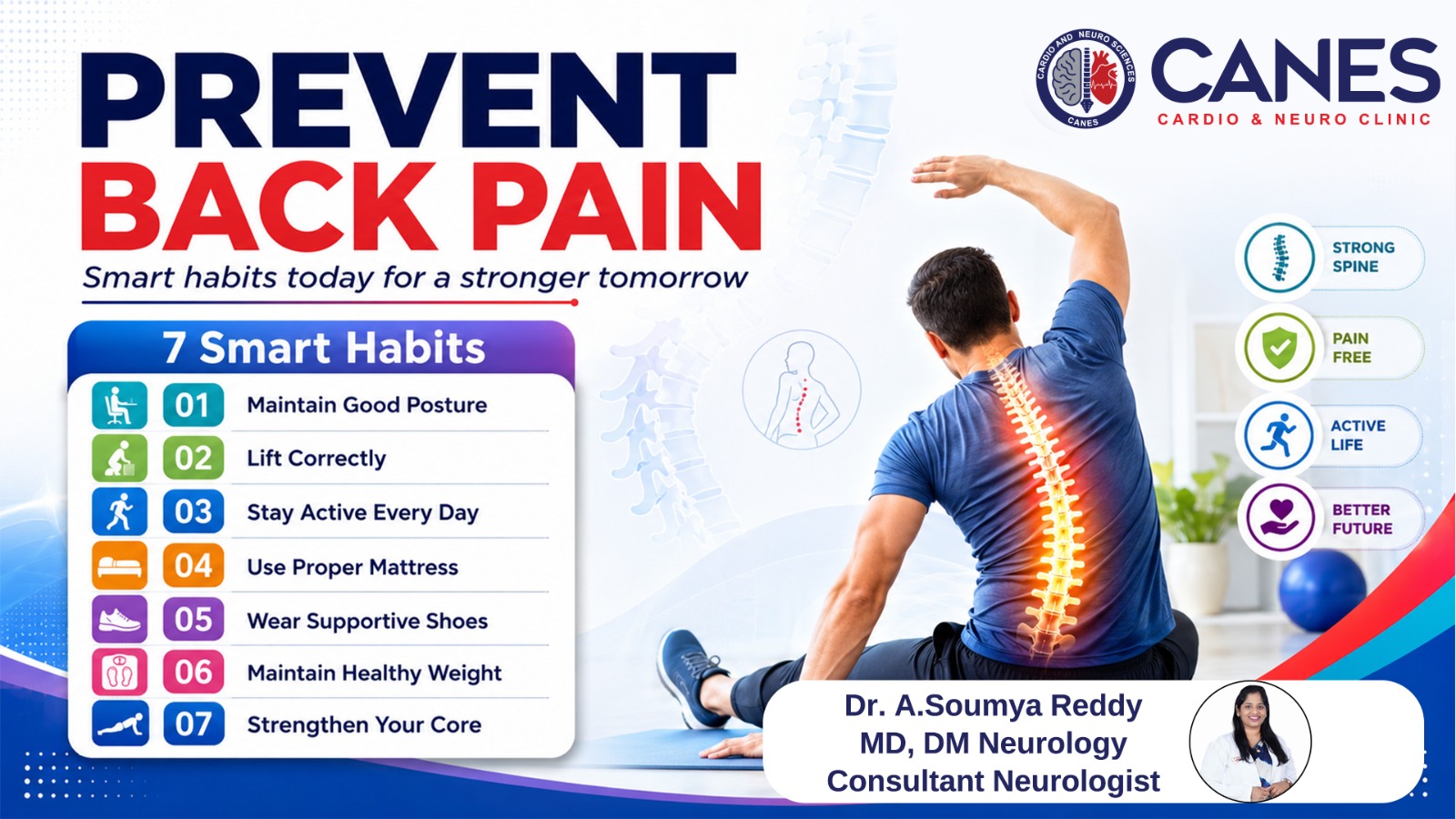
Back pain is one of the most common medical complaints worldwide, affecting people from young students to active seniors. Whether it is a dull ache after a long day at a desk or a sharp jab after lifting a heavy box, the discomfort can be debilitating. If you are searching for practical solutions on how to prevent back pain, you have come to the right place.
At CANES Cardio & Neuro Clinic, recognized as the leading heart and brain clinic in Hyderabad, we believe that spinal health is a pillar of overall neurological well-being. Guided by Dr. Soumya Reddy, a top neurologist in Hyderabad, our team specializes in diagnosing the root causes of nerve and spinal discomfort. In this complete guide, we will explore 7 proven tips to safeguard your spine and keep you moving pain-free through every stage of life.
1. Optimize Your Posture for Spinal Alignment
The way you sit, stand, and move determines the amount of stress placed on your vertebrae and discs. Poor posture is the primary cause of chronic strain. When you slouch, the natural curves of your spine are flattened or exaggerated, leading to muscle fatigue and pinched nerves.
To practice good posture:
Keep your ears aligned with your shoulders.
Avoid “text neck” by bringing your mobile devices up to eye level.
When standing, keep your weight even on both feet and your core slightly engaged.
Understanding how your daily setup affects your back is essential. Use the interactive tool below to see how adjusting your workspace can reduce spinal stress.
Interactive Spine Stress Visualizer
Explore how different posture variables impact your spinal health. Adjust the sliders to see how your neck tilt and back alignment increase or decrease pressure on your vertebrae.
2. Master Proper Lifting Techniques
One of the most frequent reasons people visit a top neurologist in Hyderabad is for sudden “slipped” or herniated discs caused by improper lifting. Whether you are picking up a toddler or a heavy grocery bag, your technique matters.
How to prevent back pain during lifting:
1. Bend your knees, not your waist: Use the power of your legs, not your lower back.
2. Keep the load close: The further an object is from your body, the more stress it puts on your spine.
3. Avoid twisting: Never rotate your torso while carrying a heavy weight; move your feet instead.
3. Strengthen Your Core Muscles
Think of your core the muscles in your abdomen and lower back as a natural corset for your spine. When these muscles are weak, your spinal column has to bear the entire weight of your torso. Regular core-strengthening exercises, such as planks or bridges, help distribute weight evenly and protect the delicate discs between your vertebrae.
4. Evaluate Your Sleep Setup
We spend nearly a third of our lives sleeping, yet many ignore how their bed affects their back. A mattress that is too soft will cause your spine to sag, while one that is too hard can create painful pressure points.
1. Side Sleepers: Place a pillow between your knees to keep your hips level.
2. Back Sleepers: Place a small pillow under your knees to maintain the natural curve of your lower back.
3. Stomach Sleepers: This is generally discouraged as it strains the neck and back, but a flat pillow under the pelvis can help if you cannot change positions.
5. Choose Supportive Footwear
Believe it or not, your choice of shoes can impact your back. High heels shift your center of gravity forward, forcing your lower back to arch unnaturally. On the other hand, completely flat shoes with no arch support can cause issues with your gait that radiate up to your spine. Aim for supportive shoes with a slight heel or good cushioning for daily use.
6. Maintain a Healthy Weight
Carrying excess weight, particularly around the midsection, pulls your pelvis forward and puts constant strain on the lower back (the lumbar region). Maintaining a healthy weight through a balanced diet and regular movement is one of the most effective long-term strategies for how to prevent back pain.
7. Stay Hydrated and Eat for Bone Health
Your spinal discs are made mostly of water. Dehydration can lead to “disc shrinkage,” where the cushions between your vertebrae become brittle and less effective. Additionally, ensure your diet is rich in Calcium and Vitamin D to keep your vertebrae strong and prevent age-related issues like osteoporosis.
When to See the Top Neurologist in Hyderabad
While many instances of back pain resolve with rest and home care, certain symptoms indicate a more serious neurological issue. You should seek a consultation at CANES Cardio & Neuro Clinic if you experience:
1. Pain that radiates down the leg (Sciatica).
2. Numbness, tingling, or weakness in the limbs.
3. Pain that does not improve after two weeks of rest.
4. Sudden loss of bladder or bowel control (this is a medical emergency).
Expert Spinal Care at CANES Clinic
At the leading heart and brain clinic in Hyderabad, we understand that every spine is different. Dr. Soumya Reddy utilizes advanced neuro-diagnostic tools to identify nerve compression or structural issues early, preventing the need for invasive surgery later.
Invest in your spinal health today for a pain-free tomorrow.
📍 Location: 3rd Floor, Tapasavi Commercial Complex, Hi-Tension Rd, Kondapur, Hyderabad
📞 Call Us: +91 9014944654
🌐 Book an Appointment: https://canesclinic.com/
Frequently Asked Questions (FAQs)
Expert Care
Hyderabad's leading Cardio & Neuro specialists.